
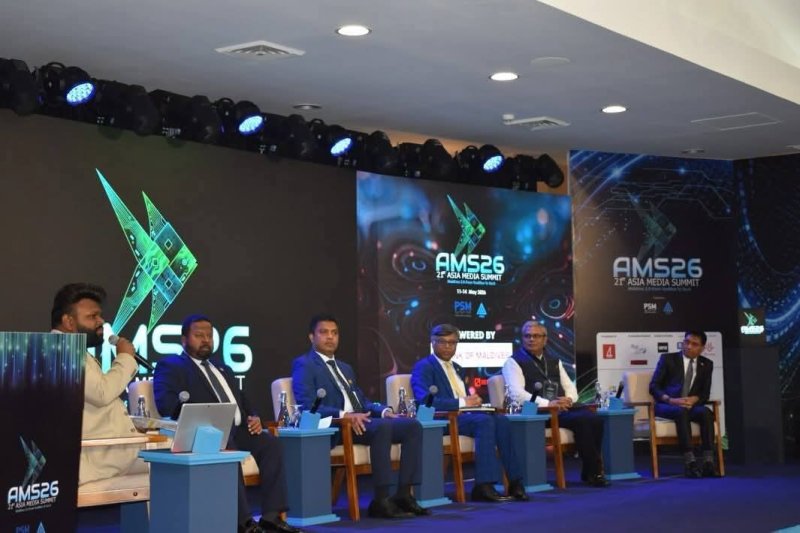











Organized by the Asia-Pacific Institute for Broadcasting Development under the theme “Maldives 2.0: From Tradition to Tech,” the summit focused on policy frameworks and professional standards needed to ensure technological advancement supports public trust, access to information, and media integrity.
Addressing the ministerial session, Jayatissa outlined the progress of formulating Sri Lanka’s new National Media Policy, which aims to strengthen editorial independence and recognize journalism as a public good.
He stressed that there is “no competition between traditional media and digital media,” noting that the real challenge is ensuring both platforms contribute to the dissemination of truthful news.
The minister said the proposed policy is built on key principles including media freedom, protection of privacy and individual dignity in the digital age, and improving professionalism through the establishment of a chartered institute for journalists.
Speaking on emerging technologies such as Artificial Intelligence (AI), Jayatissa stated that societies should not fear technological innovation, but instead embrace it responsibly as part of global evolution.
He also emphasized that “self-regulation with the participation of stakeholders, journalists and social media activists” is more effective than rigid government regulation.
The session also featured remarks from Mohammad Ali Arafat, Expedito Lemos Lait Magno, and Ibrahim Ishaam.
Among the distinguished attendees were Indra Mani Pandey and Md. Golam Sarwar.