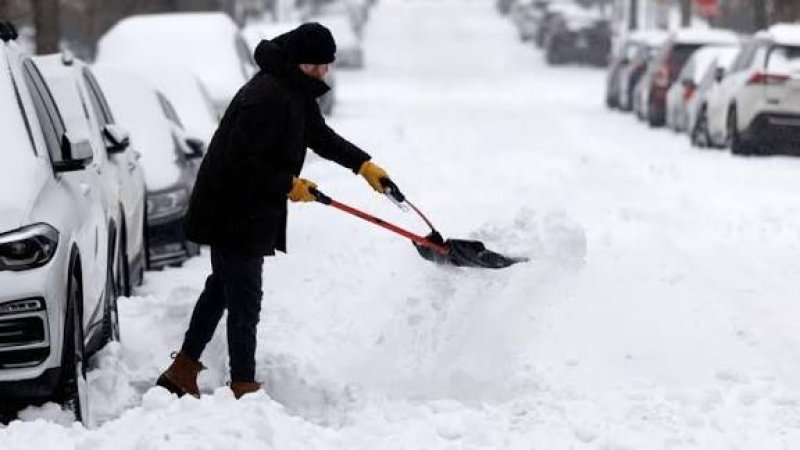
A dangerous winter storm has swept across the US, leaving at least seven people dead and cutting power to hundreds of thousands of homes.
Schools and roads across the country have been closed and flights have been cancelled as "life threatening" conditions stretched from Texas to New England, according to the National Weather Service (NWS).
At least two people died of hypothermia in Louisiana, and other deaths linked to the storm have been reported in Texas, Tennessee and Kansas.
Widespread heavy snow, sleet and freezing rain, which is a dangerous phenomenon where cooled rain droplets freeze instantly on surfaces, could last for days, and the storm could affect around 180 million Americans - more than half the population.
"The snow and the ice will be very, very slow to melt and won't be going away anytime soon, and that's going to hinder any recovery efforts," Allison Santorelli, a meteorologist with the National Weather Service, told the BBC's US media partner CBS News.
Louisiana's Department of Health confirmed on Sunday that two men had died of hypothermia.
The mayor of Austin, Texas, said there had been an "exposure-related" death.
Officials in Kansas said a woman, whose body was found on Sunday afternoon covered in snow, "may have succumbed to hypothermia".
Weather-related deaths of three people have also been reported in Tennessee.
As of Sunday afternoon, more than 800,000 households had lost power, according to poweroutage.us. Meanwhile, more than 11,000 flights were cancelled, FlightAware reported.
New York City Mayor Zohran Mamdani wrote in a post on X that at least five people in the city had died on Saturday but added their cause of death was yet to be determined.
He said, however, "It is a reminder that every year New Yorkers succumb to the cold".