
The Committee on Public Finance (COPF) has approved a Rs. 71.7 billion relief package aimed at supporting those affected by the economic impact of the conflict in the Middle East.
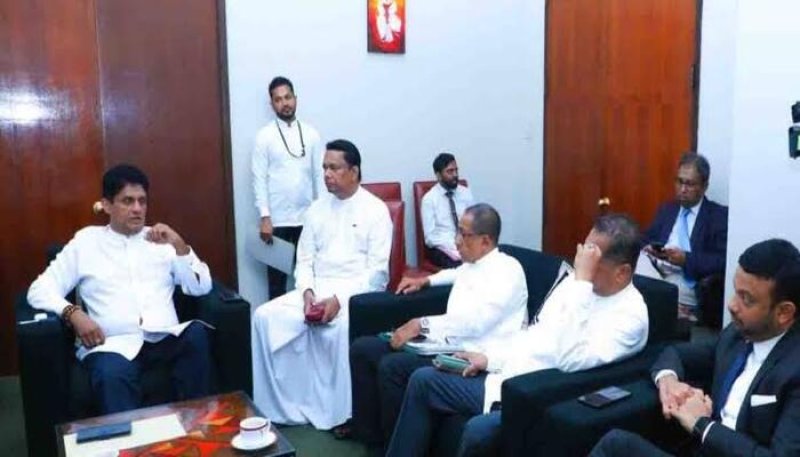
The committee, chaired by Dr. Harsha de Silva, met in Parliament recently to review the allocation and implementation of the relief package introduced by the government.
During the meeting, members focused on how the Rs. 71.7 billion would be distributed across various sectors and how the funds would be utilized to ease the economic hardships faced by the public.
The largest allocation, amounting to Rs. 52.8 billion, has been earmarked for the petroleum sector to ensure an uninterrupted fuel supply and prevent fuel shortages in the country.
A further Rs. 18.9 million has been allocated to replenish depleted annual budget provisions that had been used for fertilizer subsidies for small tea estate owners and financial assistance to the fisheries sector.
Officials stated that the entire Rs. 71.7 billion package will be financed using the unutilized balance from the Rs. 500 billion supplementary estimate previously allocated for DITVA-related expenditure. As a result, the package is intended to function primarily as consumer relief rather than a subsidy for fuel companies. It was also emphasized that these measures are temporary and introduced in response to the prevailing circumstances.
For April alone, fuel suppliers, including the Ceylon Petroleum Corporation (CPC), received Rs. 20.507 billion in subsidies.
The committee was also informed that Rs. 15 billion has been allocated to the Ceylon Electricity Board (CEB), while Rs. 8.2 billion has been set aside for the Aswesuma welfare programme.
Additionally, Rs. 3 billion has been allocated for agricultural activities during the Yala cultivation season, Rs. 2.2 billion for the plantation sector, and Rs. 1.2 billion for the fisheries industry.
The Road Development Authority (RDA) also briefed the committee on the current status of projects affected by DITVA. Construction work on the Galagedara and Rambukkana access points of the Central Expressway is scheduled for completion by 2028, with work expected to commence within the next three months.
The committee further stressed the importance of strengthening the Disaster Management Contingency Fund to enhance the country's preparedness for the potential impacts of the El Niño weather phenomenon.