Pakistan’s recently announced austerity measures highlight the severe economic pressures faced by nations heavily reliant on imported energy during times of geopolitical instability.
Driven by surging petrol and diesel prices due to conflicts disrupting the Strait of Hormuz and the Red Sea, Islamabad has implemented significant cuts to government spending. These measures include a ban on official vehicle purchases, restricting foreign travel and official dinners, mandating teleconferencing, and cutting fuel allocations for state vehicles. To suppress national fuel demand, the government previously closed schools and mandated remote work. Concurrently, to cushion the blow for lower-income citizens, Pakistan introduced a targeted fuel subsidy for motorcycles, rickshaws, and small cars.
Sri Lanka’s economic trajectory over the past few years provides a stark comparison to Pakistan's current predicament. In 2022, Sri Lanka experienced its worst financial crisis since independence, defaulting on its $46 billion foreign debt after its foreign exchange reserves depleted to near zero. The total inability to pay for imports led to crippling, widespread shortages of essential goods, including food, medicine, and fuel, which brought the country to a standstill and triggered mass protests.
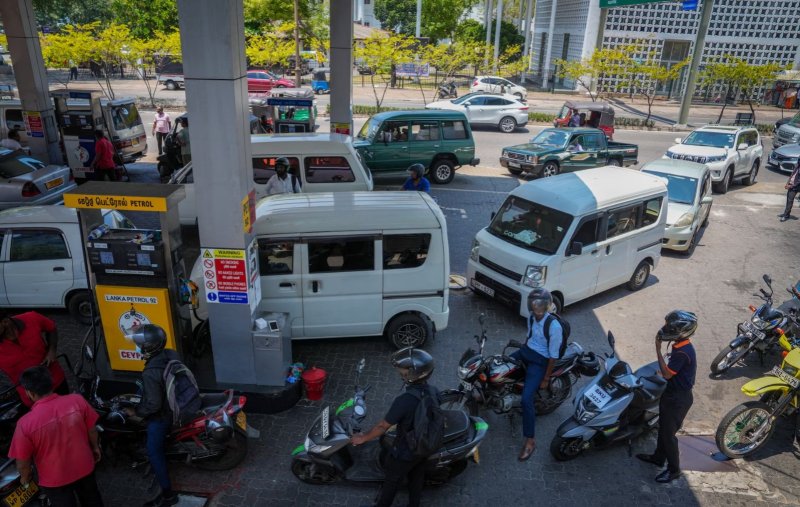
To manage its collapse, Sri Lanka adopted severe austerity measures that parallel Pakistan's actions but involved more stringent structural changes. Sri Lanka halted the import of civilian vehicles to preserve foreign currency. To manage massive fuel queues and reduce a $500 million monthly fuel import bill, the government introduced the National Fuel Pass in July 2022—a digital QR code-based rationing system that tied weekly fuel quotas to vehicle registrations. Unlike Pakistan, which is currently offering a localized subsidy to small vehicle owners, Sri Lanka was forced to drastically slash subsidies. To secure a $2.9 billion bailout from the International Monetary Fund (IMF), Sri Lanka agreed to adjust fuel prices based on production costs and global market rates, passing the financial burden directly to consumers.
While Pakistan’s current crisis is heavily triggered by immediate supply chain disruptions affecting global LNG and oil availability, Sri Lanka’s 2022 collapse was primarily a domestic foreign exchange crisis that removed its ability to participate in the global market entirely. Both nations, however, showcase the extreme vulnerability of South Asian economies to external energy shocks and the necessity of immediate demand-destruction policies.
Can Sri Lanka adopt Pakistan’s blueprint for energy conservation?
As global oil and gas supply chains face persistent threats from Middle Eastern conflicts, the question arises whether Sri Lanka should adopt the specific austerity blueprint currently being utilized by Pakistan. While curbing excessive government expenditure is universally prudent, replicating Pakistan's strategy wholesale is neither entirely feasible nor advantageous for Sri Lanka in its current recovery phase.
Banning official vehicle purchases, reducing state-funded fuel allocations, and restricting official travel are excellent administrative steps that Sri Lanka should strictly maintain. The Sri Lankan public has already endured immense economic hardship, and visible austerity at the state level is crucial for maintaining social trust. Furthermore, tactics like teleconferencing and optimizing work-from-home arrangements are cost-free efficiency drivers that reduce traffic congestion and national fuel consumption without dampening economic output.
However, Pakistan’s decision to offer a targeted fuel subsidy for small vehicles and rickshaws is a path Sri Lanka cannot easily follow. Sri Lanka's economic recovery is heavily tethered to the strict conditionalities of its $2.9 billion IMF bailout programme. The IMF framework specifically targets the elimination of unbudgeted state subsidies, requiring fuel to be priced according to actual market costs. Reintroducing fuel subsidies, even targeted ones, risks violating revenue targets and jeopardizing the disbursement of crucial IMF funds, which would severely undermine investor confidence and the nation's fragile stability. The IMF has clearly stated that sustaining these painful reform efforts is critical and that structural vulnerabilities remain.
Instead of falling back on subsidies or blanket closures like shutting down schools, Sri Lanka is better positioned to rely on the digital infrastructure it built during its own crisis. The QR-code National Fuel Pass proved to be a highly effective, data-driven mechanism to curb hoarding, eliminate black-market activity, and cap import bills without completely halting mobility. If external energy shocks worsen, Sri Lanka has the technological capability to instantly dial down the weekly QR quotas to suppress demand equitably across all sectors.