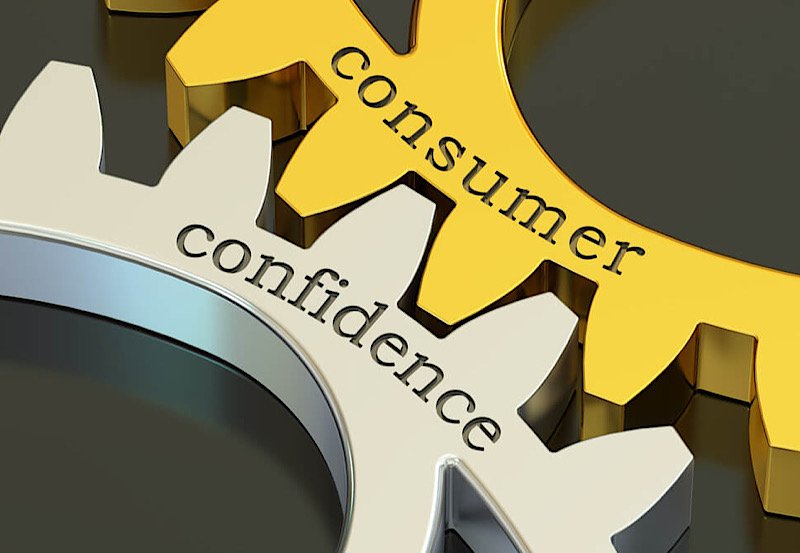
In February, consumer confidence in Sri Lanka experienced a slight upturn, according to findings from the Institute for Health Policy (IHP).
This improvement is attributed to a rebound in public expectations regarding the country's future trajectory over the next 12 months, along with a resurgence in perceived buying conditions.
The IHP's Sri Lanka Opinion Tracker Survey (SLOTS) revealed positive shifts across all three Consumer Confidence indices. The Index of Consumer Sentiment (ICS), reflecting overall economic outlook, increased by six points to reach 22 points.
Similarly, the Index of Consumer Expectations (ICE), gauging future economic perceptions, rose by seven points to 28 points.
The Index of Current Conditions (ICC), indicating present economic sentiment, also saw an uptick of four points, reaching 13 points.
Despite these gains, the IHP cautioned that consumer confidence remains in net pessimistic territory. Scores below 50 on the IHP SLOTS indices indicate prevailing pessimism among consumers.
The resurgence in consumer confidence was primarily fueled by a notable 14-point increase in public expectations for the country's situation over the next 12 months, reaching 26 points.
Moreover, current buying conditions saw a recovery, climbing by seven points to 13 points during the month.
Long-term prospects for the country over the next five years also received a boost, with expectations increasing by five points to 30 points.
Although the Personal Financial Situation index remained relatively stable, registering a marginal one-point gain at 14 points, expectations for personal financial situations in the next 12 months improved by three points, reaching 29 points.
The Consumer Confidence Index (CCI) estimates are based on extensive interviews conducted between October 21, 2021, and March 7, 2024, encompassing 15,469 respondents, including 579 interviews conducted specifically in February 2024. Sample sizes varied across indices, adjusted to ensure representativeness across gender, age, ethnicity, and income levels.
Notably, the survey, previously supported by organizations such as the Neelan Tiruchelvam Trust, UK National Institute for Health and Care Research, and Asia Foundation in Sri Lanka, is currently funded by the IHP Public Interest Research Fund and other entities, as stated by the IHP.