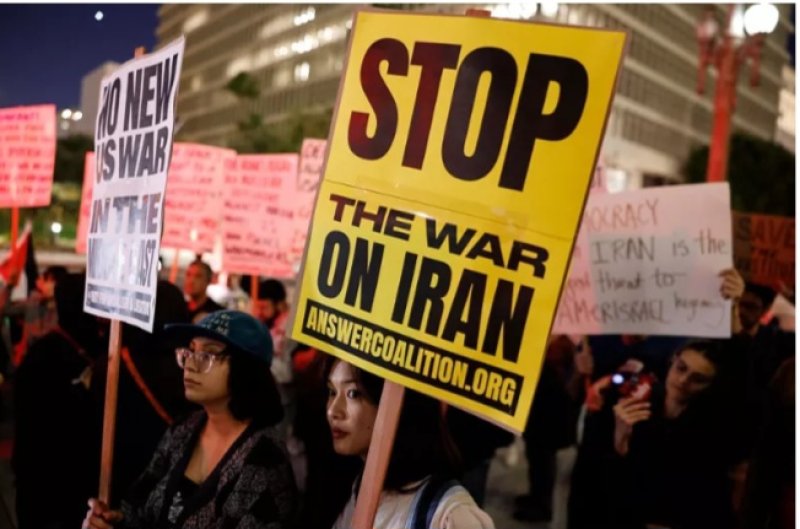
A Reuters/Ipsos poll conducted March 20-23 found 61% of Americans disapproving of U.S. military strikes in Iran, while 35% approved. A week prior, a Reuters/Ipsos poll found 59% disapproving and 37% approving of U.S. strikes in Iran. ABC news reported.
Majorities of Democrats (93%) and independents (69%) disapprove of the strikes while most Republicans (75%) approve. But Democrats are more uniform in their disapproval than Republicans are in approval.
A Pew Research Center poll, conducted March 16-22, found 59% of Americans saying the U.S. made the wrong decision in using military force in Iran, while 38% said it was the right decision.
Separately, a Quinnipiac poll conducted March 19-23 found 54% of registered voters opposed to the U.S. military action in Iran while 39% supported it. It found 42% of voters saying the war with Iran will make the world less safe, 35% saying it would make it safer and 20% saying it would make no difference. Quinnipiac did not provide respondents an option to say they were unsure, but 3% volunteered they did not know or had no opinion.
Pew found fewer saying the U.S. military action in Iran would make the world less safe (33%), fewer saying it would make it safer (27%) and about the same saying it would be about as safe as before (19%). A sizable 19% said they were not sure.
Pew also measured opinion on the effects of the war closer to home and by about 2 to 1, found Americans saying the U.S. military action in Iran would make the U.S. less safe (40%) rather than safer (22%). Another 20% said it would not make a difference and 18% were unsure.
The Reuters/Ipsos poll found nearly as large of a divide: 46% of Americans saying U.S. military action in Iran will make America less safe in the long run, while 26% said it would make America safer and 24% said it would not have much impact.
Separately, an AP-NORC poll conducted March 19-23 found 59% of Americans saying U.S. military action in Iran has gone too far, while just 26% say it has been about right and 13% say it has not gone far enough.
Majorities of Democrats (90%) and independents (63%) said U.S. military action has gone too far in Iran, while about half of Republicans said it has been “about right.”
More than 6 in 10 Americans, 63%, disapprove of how President Donald Trump is handling Iran, similar to the 64% who disapprove of how he’s handling foreign policy, according to AP-NORC. Quinnipiac found 59% of registered voters disapproving of how Trump is handling foreign policy. Pew found 61% of Americans disapproving of how Trump is handling the U.S. military action against Iran.
The AP-NORC poll found more than half of Americans trust Trump “only a little” or “not at all” to make the right decisions about the use of nuclear weapons (55%), relationships with U.S. adversaries (55%), the use of military force outside the U.S. (53%) and relationships with U.S. allies (52%).
Pew found 45% of Americans saying that the military action in Iran was not going well, while only 25% said that it was going “extremely” or “very” well. Another 28% said it was going “somewhat” well. A narrow majority (54%) said they expected military action in Iran to continue for at least six or more months (including 29% who said it would last a year or more).
Over 6 in 10 Americans (62%) oppose deploying U.S. troops on the ground in Iran, according to AP-NORC. Nearly half (48%) oppose sending government funds to aid Israel’s army. About 4 in 10 (39% each) oppose conducting airstrikes against military targets inside Iran or to kill Iranian leaders. Significant shares of each (26%-30%) say they neither favor nor oppose each.
The AP-NORC poll found roughly two-thirds of Americans said it is “extremely” or “very” important to prevent U.S. oil and gas prices from rising (67%) and to prevent Iran from obtaining a nuclear weapon (65%). Fewer said it is extremely or very important to prevent Iran from threatening Israel (39%) or to replace Iran’s government with one that is friendlier to U.S. interests (33%).
Gasoline prices have surged since the U.S. attacked Iran. Nearly half of registered voters in the Quinnipiac poll (46%) said the price of gasoline was at least a somewhat serious problem for them and their family lately.
And concern about gas prices has grown, according to AP-NORC. Nearly half, 45%, said they are “extremely” or “very” concerned about being able to afford gas in the next few months, up from 30% in December. Now, 26% say they are "extremely concerned.” Concern over being able to afford gas was higher than other issues measured in the AP-NORC poll, including electricity and people’s rents or mortgage, but was close to concern over grocery prices at 41%.
The Reuters/Ipsos poll was conducted March 20-23 among 1,272 U.S. adults and has an overall margin of error of +/- 2.8 percentage points. The poll was conducted using Ipsos’ KnowledgePanel.
The AP-NORC poll was conducted March 19-23 among 1,150 U.S. adults and has an overall margin of error of +/- 4.0 percentage points. The poll was conducted using NORC’s AmeriSpeak Omnibus.
The Quinnipiac poll was conducted March 19-23 among 1,191 registered voters and has an overall margin of error of +/- 3.6 percentage points. The poll was conducted by random digit dialing U.S. cellphones and landlines and used live interviewers.
The Pew Research Center poll was conducted March 16-22 among 3,524 U.S. adults and has an overall margin of error of +/- 1.8 percentage points. The poll was conducted using Pew’s American Trends Panel.