Sri Lanka’s 2027 Budget has introduced a wide range of proposals covering tax reforms, public sector salary and allowance increases, social welfare, infrastructure development, education, healthcare, agriculture and investment promotion.
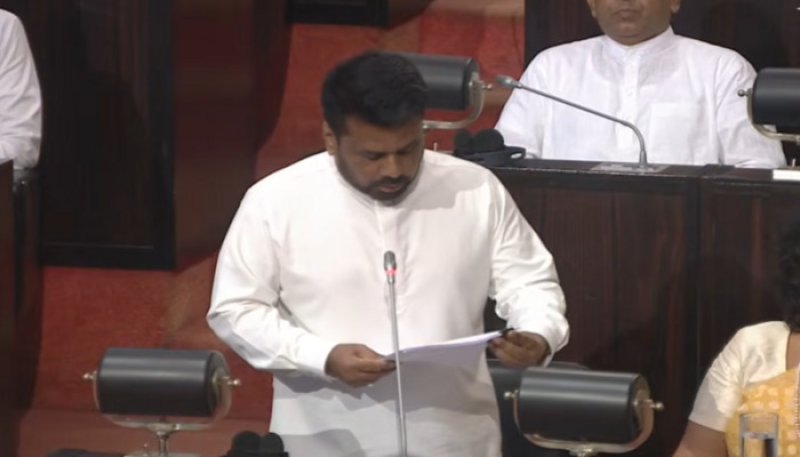
President Anura Kumara Dissanayake presented the Budget in Parliament today (November 12), outlining measures aimed at strengthening the economy, improving public services and supporting vulnerable communities.
Tax reforms and relief
Key tax proposals include:
- Revising the personal income tax structure to provide greater relief to individual taxpayers.
- Increasing monthly tax relief from Rs. 4,250 to a maximum of Rs. 36,250 under the proposed changes.
- Exempting exercise books and printed books from VAT.
- Abolishing the Tourism Development Levy currently imposed on the turnover of tourism establishments.
- Reducing the Special Commodity Levy on imported dried sprats, Maldive fish and dried chillies.
- Introducing amendments to the Excise Ordinance.
- Establishing a fairer, more transparent and efficient tax administration system.
- Providing a 200% enhanced capital allowance on qualifying capital expenditure for eligible BOI-approved enterprises, subject to conditions.
Public sector salary increases and allowances
The Budget proposes several benefits for public sector employees, including:
- Rs. 110 billion to implement the final phase of the public sector salary increase.
- Increasing the monthly DAT allowance for medical officers from Rs. 75,000 to Rs. 95,000.
- Increasing the monthly special allowance for supplementary medical, nursing and paramedical services from Rs. 6,000 to Rs. 12,000.
- Increasing allowances for university academic staff by Rs. 25,000.
- Tripling payments made to visiting lecturers.
- Increasing police officers' food and accommodation allowance by Rs. 10,000.
- Increasing the risk allowance for prison officers by 100%.
- Increasing the monthly professional allowance for judicial officers by Rs. 25,000.
- Introducing pension reforms and an interim allowance for pensioners who retired between 2020 and 2024.
Social welfare and housing
The Government has proposed Rs. 230 billion for social protection programmes, including Aswesuma and other welfare benefits.
Other proposals include:
- Increasing the monthly allowance for persons with disabilities from Rs. 10,000 to Rs. 12,500.
- Increasing the monthly allowance for kidney patients from Rs. 10,000 to Rs. 12,500.
- Increasing housing assistance for low-income families from Rs. 1 million to Rs. 1.5 million.
- Introducing a housing loan scheme for Sri Lankan migrant workers.
- Providing 10,000 apartment units in major cities for public, semi-government and private sector employees and self-employed individuals.
Infrastructure and transport
Major allocations and proposals include:
- Rs. 95 billion for sustainable public transport.
- Rs. 77 billion for clean drinking water supply.
- Rs. 77 billion for new irrigation development projects.
- Rs. 40.6 billion for road development.
- Rs. 19.5 billion for railway transport.
- Rs. 3 billion for developing roads near the Kadawatha-Mirigama Expressway.
- Completing the Kadawatha-Mirigama Expressway by September 2028.
- Constructing a new flyover near the Kandy Post Office.
- Developing a passenger terminal for cruise ships at the Port of Colombo.
Education, technology and digitalisation
The Budget includes several proposals to modernise education and public services:
- Rs. 33 billion for education infrastructure.
- Rs. 2.25 billion for university infrastructure development.
- Rs. 7.6 billion for research and development activities under the Ministry of Science and Technology.
- Introducing a National Digital Identity Card from 2027.
- Providing broadband vouchers to improve digital literacy among schoolchildren.
- Allocating Rs. 9 billion for the 'Communication to the Village' programme.
- Digitising services provided by Grama Niladhari and Divisional Secretariat offices.
- Establishing a Cyber Security Authority and introducing a Digital Economy Authority Act.
- Allocating Rs. 19.5 billion for the digitalisation of public services.
Healthcare and disaster management
Key proposals include:
- Rs. 36 billion for healthcare infrastructure.
- Rs. 3.6 billion for Aarogya wellness centres.
- Rs. 131 million to improve public health services.
- Rs. 400 million for dengue control programmes.
- Rs. 500 million for a multi-hazard early warning communication system.
- Rs. 1 billion to renovate safe centres for people affected by disasters.
- Rs. 5 billion to address potential requirements arising from the anticipated El Niño risk.
Agriculture, fisheries and rural development
The Government has proposed several measures to strengthen agricultural production and rural livelihoods:
- Rs. 44 billion for the paddy fertiliser subsidy, providing Rs. 30,000 per hectare.
- Rs. 13 billion for plantation sector development.
- Rs. 2.5 billion to improve coconut plantation productivity.
- Rs. 820 million in assistance for small tea estate owners.
- Rs. 1 billion for the rubber fertiliser subsidy.
- Rs. 6.2 billion for fisheries harbour development, research and freshwater fisheries promotion.
- Rs. 1.5 billion to rehabilitate minor irrigation systems damaged by Cyclone Ditwah.
- Rs. 3 billion to complete and establish the new Milco milk processing factory in Badalgama.
Tourism, trade and investment
The Budget also focuses on expanding tourism, exports and private investment.
Proposals include:
- Rs. 12.29 billion for tourism development.
- Rs. 27.95 billion for export and trade promotion.
- Rs. 26.54 billion for industries and investment promotion.
- Rs. 71.46 billion for the development of small and medium-sized enterprises (SMEs).
- Rs. 5 billion for rural enterprise development through loan facilities.
- Introducing loans of up to Rs. 2 million at an interest rate of 3% to improve domestic tourism businesses.
- Rs. 300 million to strengthen the Southern Mist Triangle tourism project.
- Developing Sigiriya as a tourism destination.
- Establishing a centralised online e-ticketing system covering tourist attractions.
Energy and environmental development
The Government has proposed Rs. 30.2 billion for renewable energy development, with a focus on expanding solar and wind power generation.
Other measures include:
- Establishing floating solar power plants with a combined capacity of 500 MW across 10 reservoirs.
- Providing subsidies for battery storage systems for rooftop solar power users.
- Increasing battery energy storage capacity to 1,240 MW by 2029.
- Increasing fuel storage capacity by 126,000 cubic metres.
- Allocating Rs. 12.7 billion for wastewater and sewage management.
- Allocating Rs. 15.2 billion for disaster management.
- Allocating Rs. 6.5 billion for wildlife conservation.
The Budget also proposes measures to address human-elephant conflict, including increasing compensation for deaths or permanent disability caused by protected animals to Rs. 2 million and raising compensation for damage to houses from Rs. 200,000 to Rs. 1 million.
Further proposals cover national reconciliation, public administration reforms, defence, research and development, and the modernisation of government institutions.