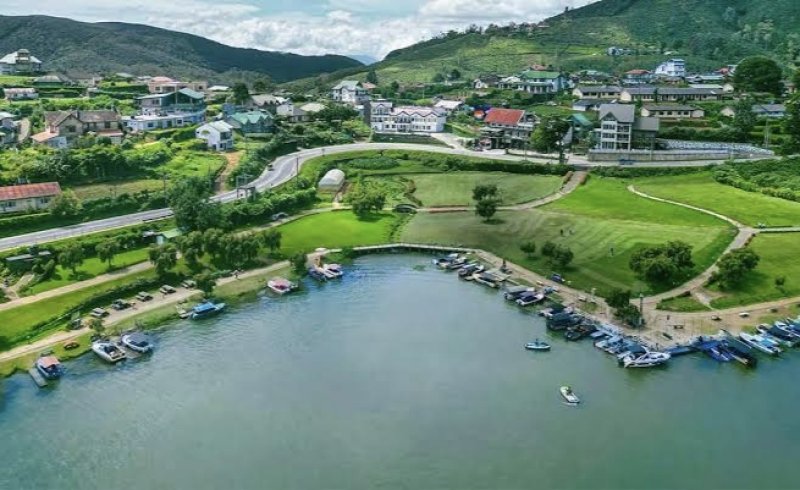
The Central Environmental Authority (CEA) has scientifically confirmed that consuming water from Nuwara Eliya’s Gregory Lake poses a severe health risk, according to Nuwara Eliya District Coordinating Committee Chairman and Member of Parliament Manjula Surweeraarachchi.
The findings were presented in reports by the CEA at a recent Nuwara Eliya District Development Committee meeting, highlighting serious deterioration in the quality of water in the popular lake.
Gregory Lake, which was constructed during the British colonial era and is fed by several smaller streams, has faced increasing pollution over the years. According to Surweeraarachchi, the gradual silting of the feeder streams has contributed to agricultural runoff entering the lake.
The runoff contains chemical fertilisers, pesticides and other pollutants, which have significantly affected the lake’s water quality and chemical composition.
CEA data show that phosphate levels in the lake have risen to 1.04 mg/L, compared with the standard safe limit of 0.20 mg/L. Nitrogen levels have also increased to 3.70 mg/L, well above the safe limit of 0.50 mg/L.
The lake’s Biochemical Oxygen Demand (BOD) has reached 9.72 mg/L, indicating a significant deterioration in water quality and posing a serious threat to the aquatic ecosystem and public health.
Surweeraarachchi said immediate measures are being planned to address the situation. A joint committee comprising officials from the Ministry of Environment, the Urban Development Authority and the Irrigation Department has been established to identify the causes of the pollution and implement urgent remedial measures.
Authorities are expected to assess the sources of contamination and develop measures to prevent further pollutants from entering Gregory Lake.