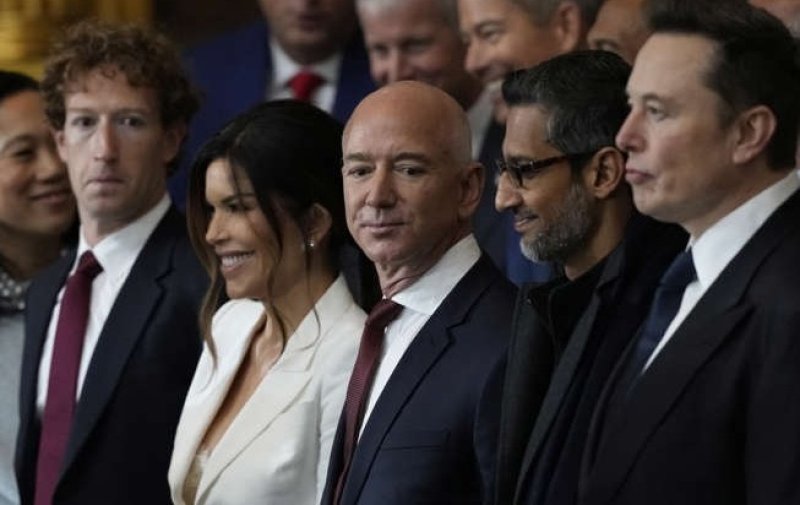
For decades, preparing for the end of the world was often seen as something associated with survivalists storing canned food in remote areas. Today, however, that perception has changed. A growing number of wealthy individuals, particularly technology leaders, artificial intelligence pioneers and hedge-fund executives, are investing large sums of money in high-tech and luxurious survival compounds.
These are no longer simple shelters. They are multi-million-dollar underground facilities designed to protect their owners from a range of possible disasters.
The shift from fringe survivalism to a serious investment among some of the ultra-wealthy has been widely discussed by industry insiders. LinkedIn co-founder Reid Hoffman has estimated that around half of Silicon Valley's tech billionaires have some form of "apocalypse insurance." This can include remote properties in New Zealand, private airstrips or fortified underground retreats.
The trend has also created a growing commercial market. Exclusive projects such as the subterranean sanctuary network known as "Aerie" show how survival preparations have developed into a luxury industry. With memberships costing millions of dollars, these facilities offer much more than basic protection. They combine high-level security with luxury facilities, including private indoor swimming pools, AI-powered medical suites, hydroponic farms and independent power systems designed to keep residents supplied for years without relying on outside infrastructure.
Several factors are driving interest in these underground facilities. Traditional concerns such as nuclear conflict, severe climate change and major pandemics remain important. In recent years, however, the rapid development of artificial intelligence has become another major concern.
As researchers move closer to the possibility of Artificial General Intelligence (AGI), which refers to machines capable of matching or exceeding human cognitive abilities, concerns about the risks of advanced AI have increased within the technology sector. Some prominent figures associated with AI development have warned that highly advanced systems could become difficult for humans to control and potentially disrupt societies.
There have also been reports of technology executives and researchers privately discussing the need for secure shelters before highly advanced AI systems are widely deployed. For entrepreneurs who spend their careers preparing for technological disruption and other major risks, the possibility of an uncontrollable intelligence represents a particularly serious concern.
Modern billionaire shelters are also very different from traditional fallout shelters. Older shelters were primarily designed for basic survival and protection. Today's compounds place much greater emphasis on comfort, mental wellbeing and maintaining a normal lifestyle underground.
Engineers designing these facilities face the challenge of reducing the psychological effects of living underground for long periods. As a result, some modern compounds include artificial daylight systems, advanced air filtration systems designed to remove biological and chemical contaminants, and soundproofing intended to create an environment similar to life above ground.
The facilities can also include heavy blast-resistant walls, ballistic glass, thermal surveillance, biometric security systems and concealed entrances. Some are designed beneath vineyards, private garages or luxury residential properties.
In many ways, these compounds function like private submarines buried deep underground. They are designed not only to protect residents from physical threats, but also to allow their communications, healthcare and lifestyles to continue even if public infrastructure breaks down.
Critics, psychologists and historians view the growing interest in billionaire bunkers from a different perspective. They argue that the phenomenon may reveal as much about the psychology of extreme wealth as it does about genuine global risks.
Psychologists have suggested that people accustomed to having extensive control over their surroundings can experience greater anxiety when faced with global events that are beyond their control.
From this perspective, bunkers may not necessarily be accurate predictions of future disasters. Instead, they can provide wealthy individuals with a sense of security and control in an uncertain world.
The trend also highlights an apparent contradiction. Technology leaders often promote visions of a future in which artificial intelligence could help cure diseases, address climate problems and reduce the need for human labour. Yet some of their personal investments suggest that they are also preparing for scenarios in which society could face serious disruption.
By purchasing remote properties and constructing underground facilities, some of the world's wealthiest individuals are creating a way to