Co-operative Movement Must Be Strengthened into a Robust Network that Plays an Active Role in the Market
President emphasises the need at 2027 pre-Budget discussion of the Ministry of Trade, Commerce, Food Security and Co-operative Development
President Anura Kumara Dissanayake emphasised that, in a small market such as Sri Lanka, it cannot be expected that the prices of goods and services will be regulated solely through market competition. The President stressed the need for the Government to establish a strong price regulation mechanism and towards this end, to further strengthen Lanka Sathosa and the co-operative movement and utilise them as key market players.
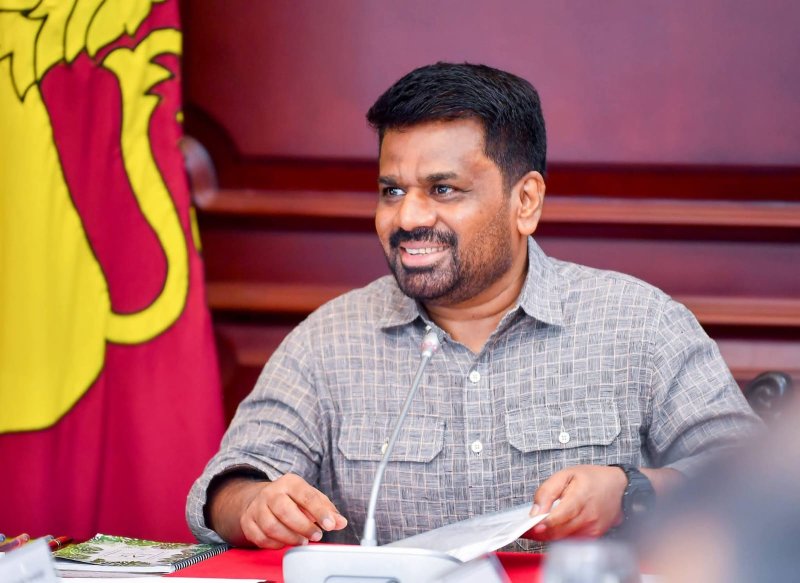
The President made these remarks today (14) while participating in a meeting at the Presidential Secretariat to review the progress of projects being implemented under the 2026 Budget allocations for the Ministry of Trade, Commerce, Food Security and Co-operative Development, as well as to discuss the Ministry’s 2027 pre-Budget proposals.
The meeting also conducted a comprehensive review of the performance of programmes implemented by 16 departments, self-financing institutions and institutions operating with Treasury allocations under the Ministry, aimed at ensuring food security and safeguarding consumer rights.
It was noted that a programme is being implemented to provide farmers with mechanical dryers on a concessionary basis for drying paddy and other grains. Arrangements have now been made to import 45 dryers, which will be provided to 45 selected institutions from among the 65 applicants.
The meeting also focused on the project to establish nine wholesale distribution centres covering all nine provinces of the country. It was noted that construction of the centres in Kurunegala and Matara has already been completed.
The President also reviewed the progress of the project to establish rural-level rice processing centres, being implemented at a cost of Rs. 01 Billion (1000 Million) under the 2026 Budget allocations, as well as the construction of the potato purchasing centre, Nuwara Eliya and the Grain Legume processing centre, Monaragala. He also emphasised the need to introduce new programmes to support big onion and maize farmers.
The roles of the departments and institutions under the Ministry were also reviewed individually, with discussions focusing on institutional-level challenges and the measures required address them.
It was noted that 34 new Production Co-operative Societies have already been registered under a project implemented by the Department of Co-operative Development targeting young people. The initiative aims to encourage greater participation by the younger generation in the co-operative sector.
The programmes implemented by the Department of the Food Commissioner were also discussed, with particular attention given to the progress of projects to establish new warehouse complexes and install solar power systems.
Discussions also focused on further strengthening the Co-operative Wholesale Establishment, Lanka Sathosa and the co-operative movement to promote greater competition in the market and ensure consumers receive a higher-quality service.
It was noted that there are approximately 2,100 co-operative outlets across the country, including Co-op Mega City and Co-op City outlets. The meeting held extensive discussions on increasing their share of the market and addressing the challenges currently affecting the sector. It was also noted that legislation is being drafted to address the management deficiencies identified within the co-operative sector.
The President also reviewed the operations of the Sri Lanka Thriposha Limited, which has recently received considerable public attention. It was noted that Rs. 05 Billion (5000 Million) has been allocated for the company under the 2026 Budget and that its operations are being maintained around the clock. Arrangements are also being made to distribute Thriposha to all Medical Officer of Health (MOH) offices and transport the products to the relevant locations. It was further noted that Lanka Thriposha Limited has obtained internationally recognised ISO certification to ensure food safety and quality.
The meeting also focused on issues relating to the sourcing of raw materials, storage and procurement processes, as well as employee-related concerns. Discussions were also held on further improving the quality of Thriposha products to ensure that they meet the required standards for consumption by children between six months and three years of age.
The activities of the Department of the Registrar of Companies were also reviewed. Secretary to the Ministry of Finance, Planning and Economic Development, Dr Harshana Suriyapperuma, instructed officials to submit proposals for resolving the issues affecting the Department and introducing the necessary legal reforms.
The President also instructed officials to expedite the processing of approximately 3,000 applications for company registration that are currently pending, in order to eliminate delays in the registration process.
The 2026 performance and progress of the Department of Commerce were also reviewed. It was revealed that representatives from 33 countries are involved in the Department’s activities through their respective embassies and high commissions.
As Sri Lanka moves towards its future economic targets, President Anura Kumara Dissanayake emphasised that gaining access to international markets must be a key priority. He stressed that the responsibilities of Commercial Officers should focus on identifying new international markets and increasing export targets. The President also highlighted the importance of conducting market research and working closely with institutions such as Chambers of Commerce to obtain and share relevant market intelligence. The President noted that the Department of Commerce has a significant role to play in strengthening the economy by expanding into emerging and growing markets and stressed the need for proactive intervention towards this objective.
Special attention was also given to the activities of the Consumer Affairs Authority. The President was informed that special inspections had been conducted at restaurants serving long-distance bus passengers and restaurants operating within private hospitals.
Noting that the public regularly raises concerns regarding food and beverage standards and price regulation, the President emphasised the need for the Consumer Affairs Authority to take proactive measures in these areas.
It was also noted that, through the intervention of the Consumer Affairs Authority, the use of polythene had been reduced from 26 million units to 16 million units. Plans are in place to further advance this programme by promoting alternatives to polythene.
The meeting also discussed further streamlining the laboratory accreditation process in Sri Lanka and developing a comprehensive programme for this purpose. Discussions were also held on the construction of the Economic Centres in Bandarawela and Matale planned under the 2027 Budget allocations, as well as the activities of the Co-operative Village in Tharapuram Mannar.
Minister of Trade, Commerce, Food Security and Co-operative Development Vasantha Samarasinghe, Deputy Minister of Trade, Commerce and Food Security R.M. Jayawardena, Deputy Minister of Co-operative Development Upali Samarasinghe, Secretary to the President Dr Nandika Sanath Kumanayake, Chief of Staff to the President Prabath Chandrakeerthi, Senior Additional Secretary to the President Kapila Janaka Bandara, Secretary to the Ministry of Finance, Planning and Economic Development Dr Harshana Suriyapperuma and Secretary to the Ministry of Trade, Commerce, Food Security and Co-operative Development .K.A.Vimalenthirarajah, together with officials of the Ministry of Finance and heads and senior officials of all institutions under the Ministry of Trade, Commerce, Food Security and Co-operative Development, participated in the discussion.