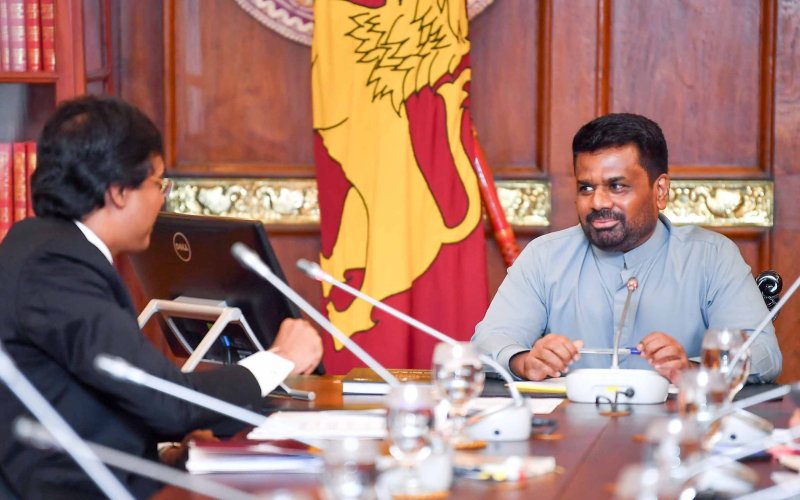
Central Bank of Sri Lanka (CBSL) Governor Dr. Nandalal Weerasinghe said that the country's economy is steadily recovering under the ongoing $2.9 billion International Monetary Fund (IMF) program.
Central Bank of Sri Lanka (CBSL) Governor Dr. Nandalal Weerasinghe said that the country's economy is steadily recovering under the ongoing $2.9 billion International Monetary Fund (IMF) program. In a recent interview, the Governor emphasized that the Central Bank's primary objective is to maintain a balanced monetary policy that effectively controls inflation without hindering the nation's broader economic growth.
Addressing recent monetary policy decisions, Dr. Weerasinghe noted that the CBSL proactively raised interest rates by 100 basis points last month to counter inflationary pressures stemming from geopolitical tensions, specifically the conflict involving Iran. This marked the first interest rate hike in over three years. However, he clarified that because current inflation remains in line with expected levels, he does not foresee any immediate need to further tighten or loosen monetary policy for the remainder of this year.
Although Sri Lanka’s primary inflation indicator, the Colombo Consumer Price Index (CCPI), reflected a notable increase in July, the Governor explained that the full economic impact of the recent rate hike will take 12 to 18 months to fully materialize. He expressed confidence that inflation will return to the Central Bank's target level by the first half of next year. Furthermore, Dr. Weerasinghe highlighted that maintaining low inflation is a crucial prerequisite for future economic progress, projecting an economic growth rate between 4% and 5% for the current year following positive growth trends in 2024 and 2025.
The Governor also addressed potential challenges to the country's external accounts, particularly the rising costs of fuel imports. To buffer against these external pressures, strengthening Sri Lanka's foreign exchange reserves remains a top priority. Dr. Weerasinghe revealed that the Central Bank aims to boost the country's gross foreign exchange reserves from the current $6.6 billion to approximately $8 billion by the end of the year.