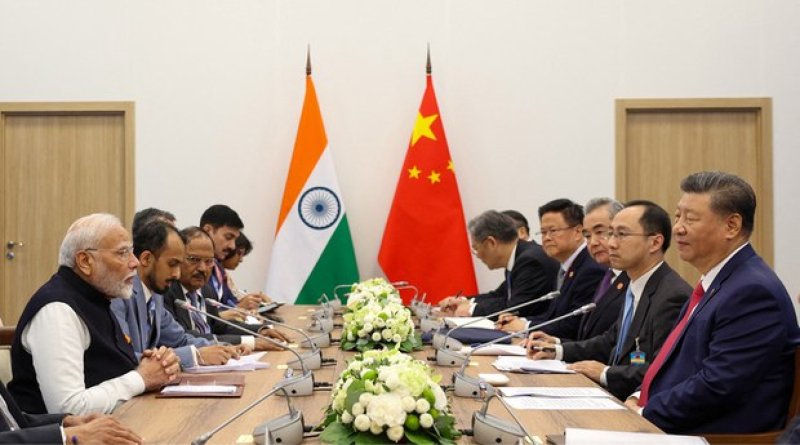
In a significant diplomatic development, Indian Prime Minister Narendra Modi and Chinese President Xi Jinping met formally for the first time in four years, following a deadly border clash in 2020 along the disputed Himalayan frontier. The meeting took place on the sidelines of the BRICS summit in Russia, signaling renewed efforts to ease tensions between the two Asian giants.
The encounter comes just days after both nations announced they had reached an agreement to "disengage and resolve issues" in several key areas along the contested border. This decision marks a breakthrough in the long-standing stalemate that has cast a shadow over India-China relations for decades.
Modi and Xi expressed optimism about the agreement and emphasized the importance of maintaining peace along the frontier. They pledged to initiate dialogue again, starting with a meeting between top officials from both sides aimed at finding long-term solutions to the border disputes. An "early date" for this meeting is being arranged, highlighting the urgency of resolving these tensions.
The backdrop of the meeting is the highly sensitive and complex 3,440-kilometer (2,100-mile) disputed border, known as the Line of Actual Control (LAC). The boundary, which winds through rugged mountains, rivers, and glaciers, often shifts due to natural factors, leading to frequent face-offs between Indian and Chinese soldiers. This friction has occasionally escalated into violent confrontations, with the most significant being the 2020 clash in the Galwan Valley, which resulted in the deaths of 20 Indian soldiers and an undisclosed number of Chinese troops.
India and China share a troubled history over the border, having fought a full-scale war in 1962, where India faced a significant defeat. While diplomatic efforts have been made over the years to prevent large-scale conflict, skirmishes and standoffs have continued intermittently.
The recent disengagement agreement comes as a positive step toward deescalation, though both nations are aware of the delicate nature of their relationship. The border, with its shifting terrain and strategic importance, remains a deeply sensitive issue.
The meeting between Modi and Xi is seen as a signal of intent to move beyond past hostilities and focus on dialogue. However, the challenge of resolving the border dispute will require continuous engagement and trust-building between the two countries, both of which have vast military presences in the region.
The outcome of future talks between their officials will be closely watched as the global community looks for signs of stability in a region critical for both geopolitical and economic reasons. Both India and China have reiterated their commitment to peace, but the path ahead remains complex, with no quick solutions expected soon.