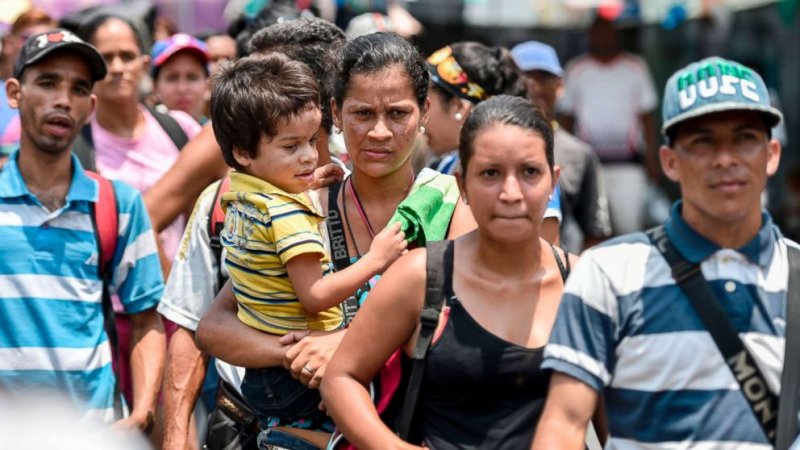
Venezuelans are going to the polls on Sunday in what has been described as the biggest challenge to the governing socialist PSUV party since it came to power 25 years ago
.Nicolás Maduro - who has been president since the death of his mentor, Hugo Chávez, in 2013 - will be running for a third consecutive term.
His main challenger is Edmundo González, a former diplomat who has the backing of a coalition of opposition parties.
Polls suggest Mr González has a wide lead over the incumbent, but as Mr Maduro's 2018 re-election was widely dismissed as neither free nor fair, there are fears that the result of this election could be tampered with, should it not go Mr Maduro's way.
Those fears have been compounded by the fact that Mr Maduro has told his supporters that he would win "by hook or by crook".
Moreover, there is only a very limited number of independent election observers in the country to monitor the poll - four from the United Nations and a small technical team from the Carter Center.
An invitation to European Union observers to be present was revoked by the head of the electoral authority, who is a close ally of President Maduro.
The ex-President of Argentina, Alberto Fernández, was also uninvited after he said that the Maduro government should accept a possible defeat at the polls.
Mr Maduro has, however, welcomed hundreds of guests from countries allied with his government, who he says will "accompany" the vote.
The opposition meanwhile has mobilised thousands of people to act as witnesses at individual ballot stations.
Despite the many hurdles the opposition has faced - including constant harassment and the arrest of more than 100 of people linked to its campaign since the start of the year - the opposition has been sounding an optimistic note.
It argues that the opinion polls have given its candidate such a big lead over President Maduro that it will not be possible for him to "steal the election".
The government has dismissed the opinion polls quoted by the opposition, maintaining it is their candidate who is in the lead.
Mr Maduro himself has resorted to stark language in the run-up to the polls, warning of a "bloodbath" should he be defeated.
That statement earned him a rare rebuke from Brazil's left-wing leader Luiz Inácio Lula da Silva, who said that Mr Maduro should learn "that if you win, you stay in power, but if you lose, you go".
Mr Maduro has used the image of a fighting cockerel as a symbol for his campaign and has struck a combative note.
BBC