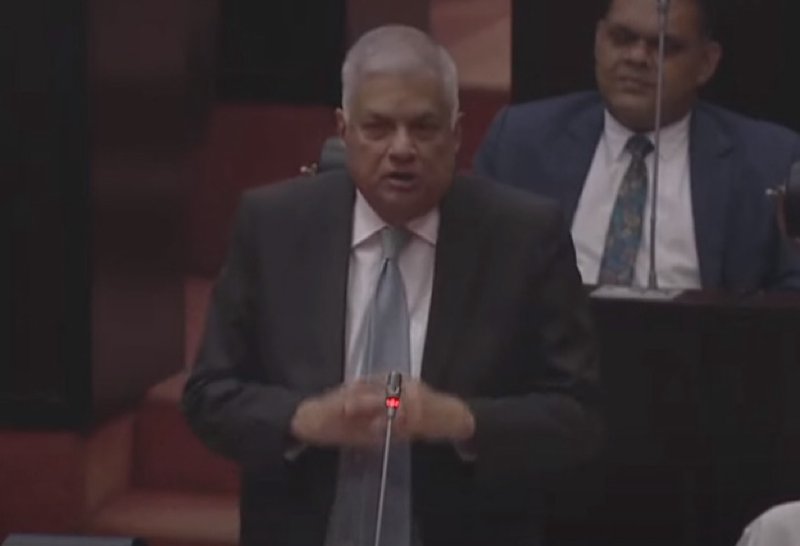
President Ranil Wickremesinghe made a notable appearance at Parliament this morning (March 06) to deliver a special statement regarding the strides made in Sri Lanka's economic recovery process.
The parliamentary proceedings, chaired by Speaker Mahinda Yapa Abeywardena, commenced promptly at 9:30 a.m.
In his address to the Chamber, the Head of State highlighted the tangible benefits accruing to citizens from the government's rigorous efforts to rejuvenate the economy. Wickremesinghe underscored the pivotal role played by an economic plan devised in collaboration with the International Monetary Fund (IMF), which gradually restored normalcy, thus alleviating the burden on the populace.
Pointing to encouraging signs, Wickremesinghe noted that after six consecutive quarters of contraction, the Sri Lankan economy began to rebound in the third quarter of 2023. International financial institutions have forecast potential economic growth ranging from 2% to 3% for the year 2024, signaling cautious optimism.
Addressing fiscal achievements, the President revealed a remarkable surge of over 50% in state revenue in 2023 compared to 2022, leading to a surplus in the primary account. This surplus facilitated the settlement of outstanding payments owed to government contractors, spanning the past 3-4 years.
Highlighting a significant economic milestone, Wickremesinghe mentioned a drastic reduction in inflation from 70% in September 2022 to a mere 5.9% in February 2024. He attributed this feat to coordinated macroeconomic demand management efforts by the Central Bank and the government, offering relief to small- and medium-scale enterprises (SMEs) and consumers alike.
Moreover, the President announced a substantial boost in usable foreign exchange reserves, soaring from less than USD 20 million in mid-April 2022 to over USD 3 billion presently. Import restrictions, except for private motor vehicles, have been lifted to further bolster economic activity.
Turning to debt restructuring negotiations, Wickremesinghe expressed optimism about reducing annual external debt payments from 9.5% to 4% of GDP upon a successful outcome.
He emphasized that sustained economic growth in 2022 and 2023 would enable the government to maintain substantial revenue levels, thus alleviating the burden of debt servicing on the country.