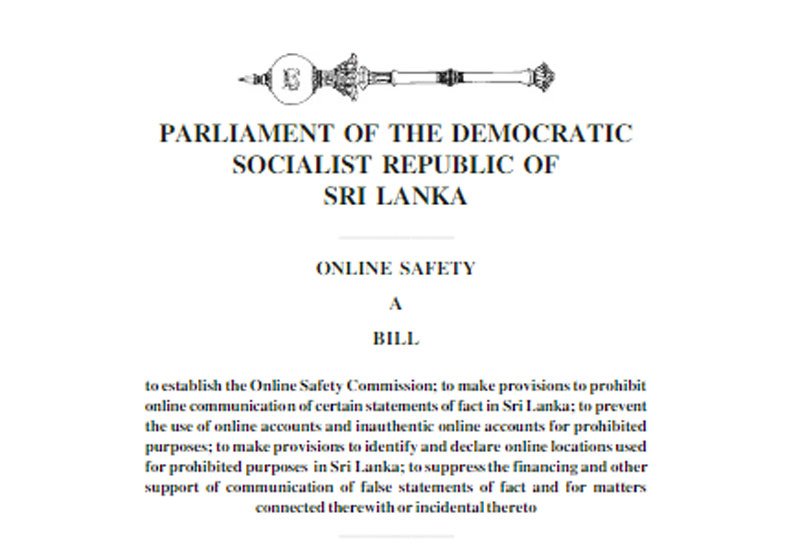
Following its passage through Parliament and endorsement by Speaker Mahinda Yapa Abeywardena, the Online Safety Bill, which stirred considerable debate, has been officially gazetted and enacted into law.
The legislation, hailed by proponents as a vital step towards enhancing online safety, faced vehement opposition and critique from various quarters, particularly the Asia Internet Coalition (AIC), representing major tech companies including Google, Meta, and X.
The bill underwent a tumultuous legislative journey, culminating in its approval during the third reading on January 24, a stage notably devoid of a voting process. Despite incorporating several amendments recommended by the Supreme Court, opposition MPs assert that the final version failed to adequately address all concerns raised during deliberations, particularly those regarding the accommodation of recommended amendments.
The Asia Internet Coalition (AIC) has emerged as a vocal critic, labeling the bill as "unworkable" and expressing deep reservations about its implications for online platforms and digital freedom. The association, which champions understanding and resolution of Internet policy issues across the Asia Pacific region, contends that the legislation could potentially stifle innovation and hamper the digital ecosystem.