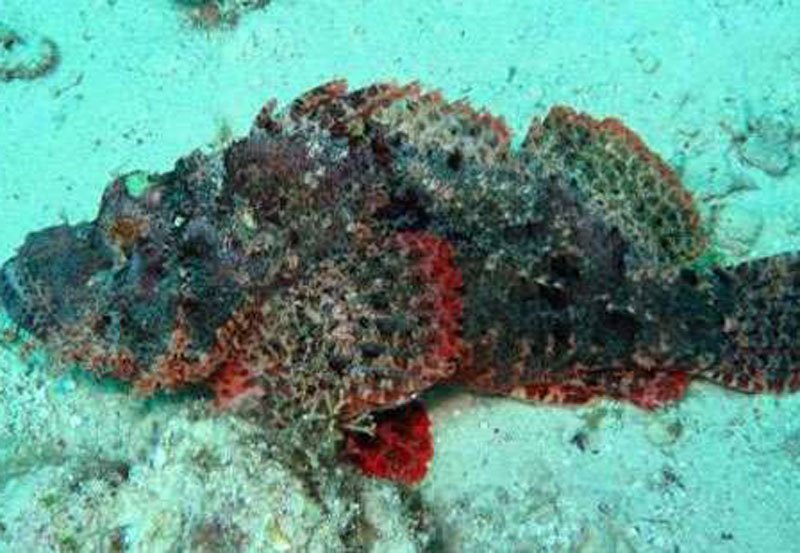
With the changing of the monsoon season, there has been a noticeable rise in the presence of the highly poisonous fish species known as the 'Gonmaha-Stone Fish' in sea areas, according to Senior Lecturer Dr. Janaka Ruben from the Parasitology Department.
Dr. Ruben clarified that while these fish are indeed highly poisonous, they do not pose a direct threat to people or other living beings in the sea. The Gonmaha-Stone Fish, classified as a reef fish, typically avoids aggressive behavior towards humans.
However, recent reports have emerged of individuals being admitted to the Karapitiya Teaching Hospital after accidentally touching or stepping on these fish. The venom of the Gonmaha-Stone Fish can cause severe injuries when it comes into contact with human skin.
This particular species of stonefish is commonly found in sandy or rubble areas of reef flats, shallow lagoons, and even small pools during low tide. Its slow movement and effective camouflage among the substrate, sometimes even covered with algae, make it difficult to spot.
Dr. Ruben explained that the stonefish, which is prevalent in various parts of Sri Lanka, is also found in countries such as Australia, Indonesia, and India. During breeding seasons, these fish tend to approach the shore, as is typical behavior.
The doctor emphasized that the stonefish has limited swimming ability and is slow-moving. While it swims, it does not actively sting.
The stonefish is characterized by several spines on its back, and the venom is released when these spines are stepped on or touched. Stepping on the fish's spines can cause severe pain.
In light of these circumstances, Dr. Ruben advised caution for those bathing in the sea, urging them to wear slippers or protective footwear to minimize the risk of coming into contact with the stonefish.
As beachgoers enjoy their time by the sea, it is essential to remain vigilant and take necessary precautions to ensure their safety and avoid any potential encounters with these poisonous fish.