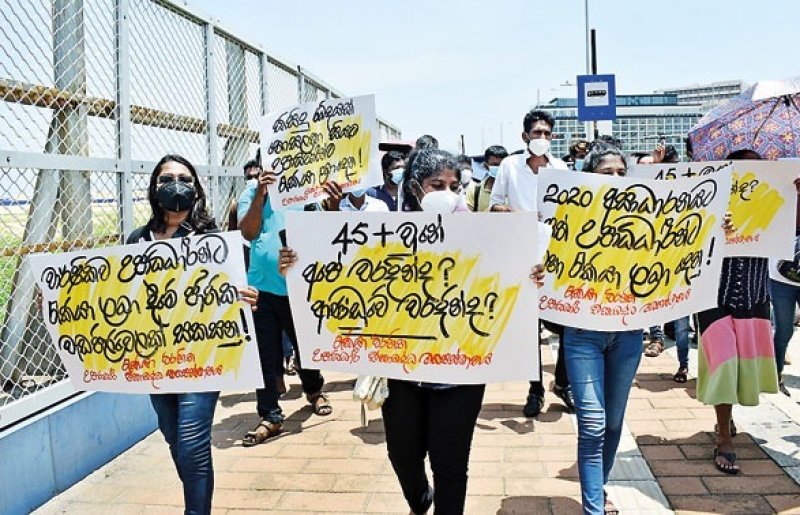
More than four in ten young Sri Lankans with postsecondary education are out of work, placing Sri Lanka at the top of a regional comparison of 12 Asia-Pacific economies, according to data presented by the International Monetary Fund (IMF).
The IMF data show an unemployment rate of 43 percent among Sri Lankan youth with postsecondary education, highlighting a growing mismatch between educational qualifications and available employment opportunities.
The figures were presented at the IMF’s regional outlook briefing for Asia and the Pacific on April 16 and were later reproduced in the September edition of the Fund’s Finance & Development magazine.
Sri Lanka’s rate is around seven percentage points higher than Bangladesh, where unemployment among young people with postsecondary education stands at approximately 36 percent. The gap is even wider compared with Thailand, where the corresponding rate is 13.2 percent.
The figures point to a wider regional trend in which unemployment among young people does not necessarily decline with higher levels of education. The pattern is particularly pronounced in South Asia, where highly educated young people are facing difficulties finding employment that matches their qualifications.
The IMF figure for Sri Lanka is also significantly higher than the country’s overall youth unemployment rate. Department of Census and Statistics data show that unemployment among Sri Lankans aged 15 to 24 stood at 19.5 percent in 2025, while the national unemployment rate was 3.9 percent.
Meanwhile, unemployment among people educated to GCE Advanced Level and above, across all age groups, fell to 6.0 percent in 2025 from 7.8 percent in 2024. The figures indicate that younger and more highly educated entrants to the labour market face particular difficulties in securing suitable employment.
IMF Asia and Pacific Department Director Krishna Srinivasan said highly educated young workers are struggling to find positions that match their qualifications. He also warned that while artificial intelligence could boost economic growth and productivity, rapid adoption could create additional pressure on young workers if skills development does not Sri Lanka, the high level of unemployment among educated youth adds to the country’s broader challenge of creating sufficient skilled employment and ensuring keep pace.
The IMF has highlighted the need for education systems, universities and technical training programmes to respond more closely to changing labour-market requirements, particularly as technology continues to reshape employment.
The challenge extends beyond Sri Lanka. The World Bank estimated in June that around 1.2 billion people are expected to enter the labour force in developing economies over the next decade, creating what could be the largest youth cohort entering the global labour market.