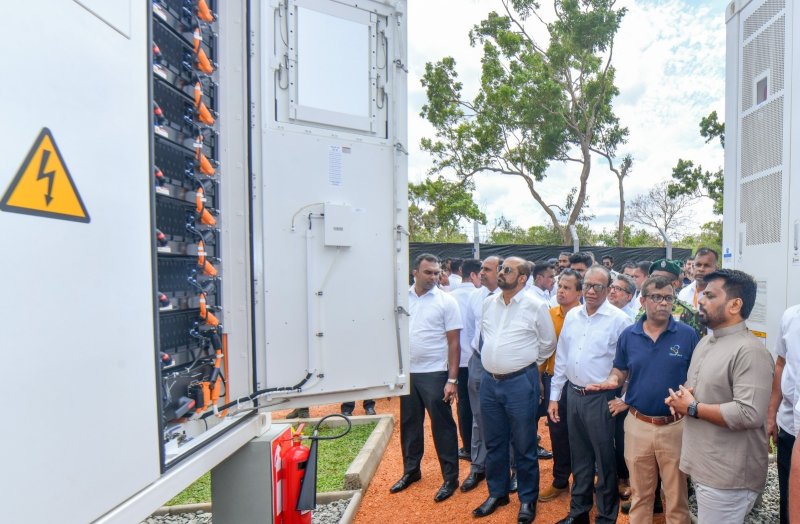
Sri Lanka marked a major milestone in its renewable energy transition today as President Anura Kumara Dissanayake officially commissioned the country’s first 10 MW/40 MWh Battery Energy Storage System (BESS) in Anuradhapura, integrating it directly into the national electricity grid.
Constructed in partnership with Storex (Private) Limited, the Anuradhapura facility is designed to address a critical flaw in the island's power mix by capturing excess daytime solar production and releasing it during peak evening hours. The installation represents the first phase of a broader 130 MW/520 MWh rollout across 13 locations nationwide, with the remaining systems scheduled for grid connection over the next two to three months.
Addressing the gathering, Minister of Ports, Civil Aviation, and Energy Anura Karunathilake emphasized that the project supports the government’s vision of a self-sufficient "green renaissance." He noted that Sri Lanka currently generates nearly 3,000 MW of solar power during the day against an average daytime demand of 2,800 MW, but faces shortfalls during night peak hours when demand surges to roughly 3,100 MW—a gap historically bridged by expensive fossil fuel generation.
The Minister revealed that additional battery storage initiatives totaling 160 MW will be added to the national grid before the end of the year, alongside ongoing tender evaluations for another 800 MW of battery capacity targeted for completion by mid-2027. By storing surplus renewable energy and displacing costly thermal power at night, the administration aims to stabilize the national grid while lowering overall electricity tariffs for the public.