











Representing Sri Lanka, Deputy Minister of Environment Anton Jayakodi today (July 3) participated in a special session on "Regional Cooperation for Blue Carbon Financing to Accelerate Collective Climate Action in Asia and the Pacific." The event was jointly organized by the United Nations Economic and Social Commission for Asia and the Pacific (UNESCAP) and the Landscape Alliance in Bangkok, Thailand.
Addressing the session, Deputy Minister Jayakodi emphasized that for island nations such as Sri Lanka, the ocean is not merely a geographical boundary but the country's lifeline. He highlighted the critical role of Blue Carbon ecosystems in addressing the global climate crisis and stressed the importance of enhanced regional cooperation to unlock their full environmental and economic potential.
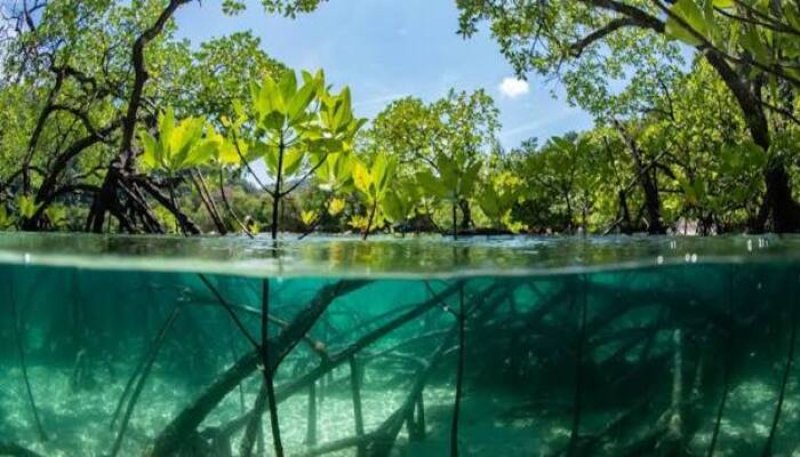
He noted that while terrestrial forests are often described as the "lungs of the Earth," coastal ecosystems—including mangrove forests, seagrass meadows, and salt marshes—can absorb carbon at rates up to ten times higher than tropical rainforests and store it in their soils for centuries.
The Deputy Minister also pointed out that, beyond mitigating climate change, mangrove ecosystems serve as natural coastal defenses against rising sea levels and extreme weather events. Referring to lessons learned from the 2004 Indian Ocean tsunami, he stated that mangroves can reduce wave energy and storm surge impacts by approximately 66 percent.
He further highlighted that these coastal ecosystems are a cornerstone of Sri Lanka's Blue Economy, supporting fisheries, food security, local livelihoods, and eco-tourism. Sri Lanka, he said, has already incorporated the restoration and protection of coastal ecosystems into its latest Nationally Determined Contributions (NDCs 3.0) and National Adaptation Plan as part of its pathway toward achieving net-zero emissions.
As the host country of the South Asia Co-operative Environment Programme (SACEP) and an active member of regional platforms such as the Indian Ocean Rim Association (IORA), Sri Lanka remains committed to strengthening regional collaboration on climate resilience and marine conservation.
The Deputy Minister noted that Sri Lanka is actively contributing to regional initiatives, including mangrove mapping, carbon stock assessments, the development of common regional measurement methodologies, and the exchange of best practices through South-South Cooperation.
Concluding his remarks, he stressed that protecting and investing in Blue Carbon ecosystems is not only an environmental priority but also a strategic necessity for ensuring the long-term sustainable socio-economic development and climate resilience of the Asia-Pacific region.