










He said that while meteorologists predict a rise in environmental temperatures due to the warming of the tropical Pacific Ocean, this warming trend is only expected to manifest locally after the coming month of February.
Detailing the island's current weather patterns, Mr. Randeni stated that Sri Lanka is presently experiencing southwest monsoon rains, which are expected to last until September. While intermittent rains may occur during July and August, the monsoon rainfall is generally projected to decrease overall during those two months. This will be followed by the second inter-monsoon season in October and November, which typically brings heavier rainfall, before transitioning into the northeast monsoon that lasts through February.
The Director explained that because the first inter-monsoon season begins shortly after in March and April, the northeast monsoon remains the primary source of heavy rainfall for the country during the winter months. He added that while some dry weather is expected in July and August, any potential El Niño impact would affect the northeast monsoon season more significantly than it would the southwest monsoon or the inter-monsoon rains in November. Consequently, temperatures are predicted to rise specifically during February and March of next year.
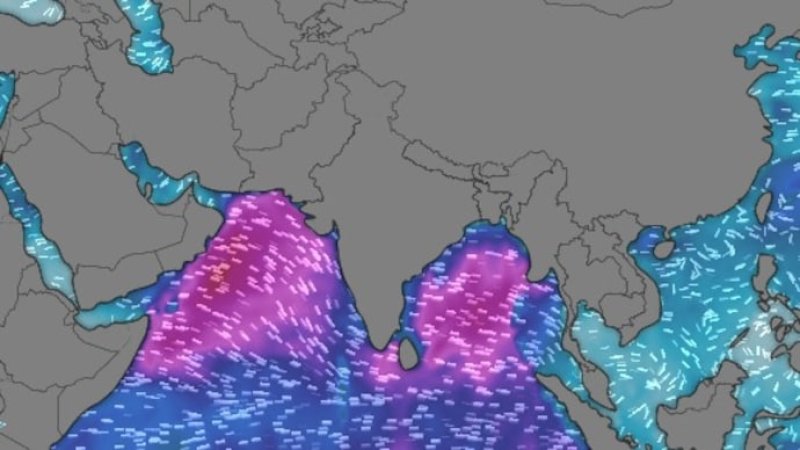
Despite these global Pacific conditions, Sri Lanka’s geographical setting provides a natural shield. Mr. Randeni highlighted that since the country is located in the Indian Ocean, it is influenced by the Indian Ocean Dipole (IOD) mechanism. This mechanism causes sea surface temperatures in the western Indian Ocean to rise, leading to increased evaporation. As a result, Sri Lanka is unlikely to face a shortage of water vapor.
Elaborating further on this natural defense system, Mr. Randeni stated:
> "Regardless of the global weather patterns in the Pacific, Sri Lanka is situated in the Indian Ocean, which features the Indian Ocean Dipole mechanism. This increases warmth in the western parts of the Indian Ocean, causing seawater to evaporate. The rising air currents carry this water vapor to form clouds. Due to Sri Lanka's topography—specifically our central hills—the incoming winds cool down against the mountains, creating rain. Because Sri Lanka is an island surrounded by a vast ocean and possesses a central mountain range, there is no way for us to experience a shortage of water vapor. Therefore, we do not anticipate a drastic drop in rainfall, and a severe El Niño situation is highly unlikely."
>
The Director concluded by noting that if a severe El Niño effect were to occur, it would typically happen after December, specifically during January and February. He emphasized that regardless of the forecasts, preparedness remains crucial. He urged the public to consume water sparingly and warned that if an unexpected severe El Niño condition does hit, it could lead to food shortages and lower agricultural yields, particularly impacting rice production.