
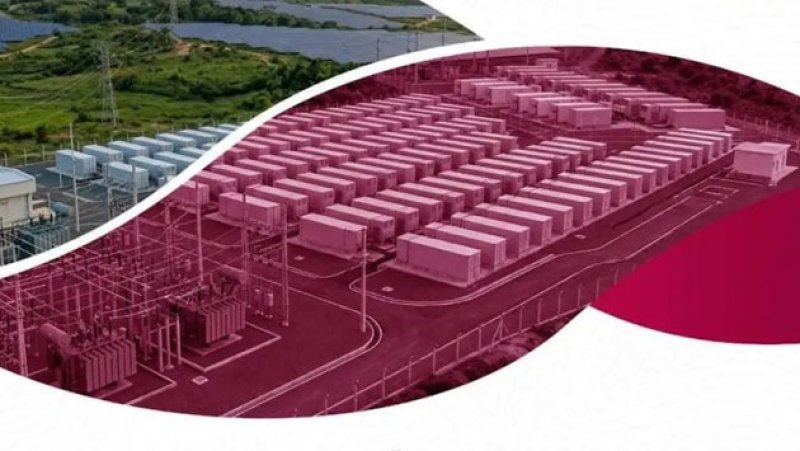











The government had called international competitive tenders in July 2025 for 16 grid-scale battery storage systems under the 160MW programme. The projects were awarded to three selected companies, with Windforce PLC being one of the key implementers.
According to officials, six of the imported systems brought in by Windforce PLC have now reached the country and will be installed at grid substations located in Mahao, Vavuniya, Chunnakam, Kilinochchi, Anuradhapura, and Polonnaruwa.
Each system is capable of storing up to 40MW of energy during off-peak daytime hours and releasing up to 10MW of electricity during peak evening demand. Collectively, the six systems will contribute around 60MW of discharge capacity to the national grid.
The storage units will be controlled and managed by the National System Operator (NSO), operating under the Ministry of Power and Energy, while maintenance responsibilities will remain with the respective project companies.
Officials highlight that this is the first large-scale deployment of battery energy storage technology in Sri Lanka, aimed at improving grid stability, reducing dependence on fuel-based power generation, and lowering electricity costs for consumers.
Currently, generating electricity using fuel-based thermal sources costs approximately LKR 115 per unit, whereas the introduction of BESS technology is expected to reduce this to around LKR 30 per unit. The initiative is also projected to save roughly USD 2.6 million per month in foreign exchange expenditure previously spent on fuel imports for power generation.
Authorities say the project is part of a broader strategy to address rising energy demand, reduce vulnerability to fuel price fluctuations, and support climate-friendly power system development in Sri Lanka.