










In what was the most highly anticipated moment of the Artemis II mission, four astronauts flew around the moon Monday, snapping photos and making detailed observations from the window of their Orion spacecraft.
NASA astronauts Reid Wiseman, Victor Glover and Christina Koch and Canadian astronaut Jeremy Hansen captured a slew of photos of the moon’s rugged terrain, sprawling impact craters and vast, dark plains.
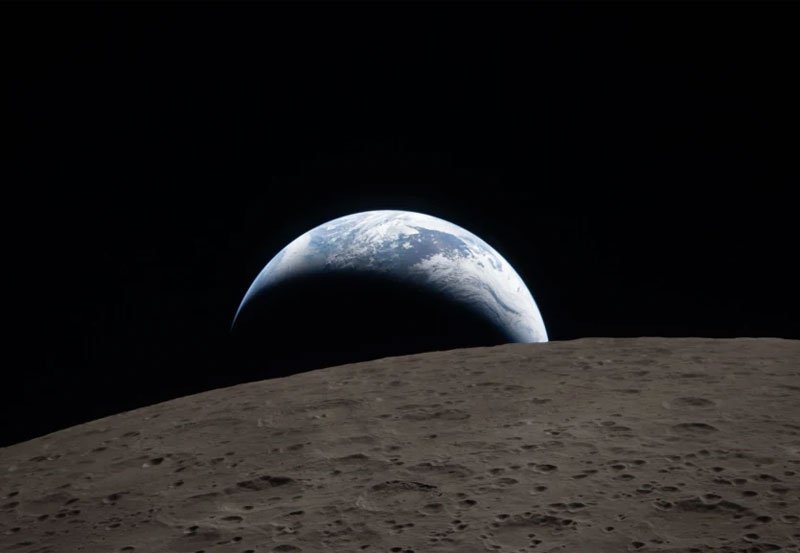
The first newly released photo, shared Tuesday morning by the White House on X, shows “Earthset,” a moment captured from the lunar far side as Earth dipped out of view on the opposite edge of the moon.
The new image is a kind of re-creation of the iconic “Earthrise” photo taken during the Apollo 8 mission in 1968. The Apollo 8 photo, however, showed Earth reemerging into view, rather than disappearing, as astronauts Bill Anders, Frank Borman and Jim Lovell circumnavigated the moon.
The White House also shared a spectacular new photo that the Artemis II astronauts snapped of a solar eclipse from space. The eclipse occurred Monday evening, toward the end of the mission’s hourslong lunar flyby, when the sun slipped behind the moon.
The astronauts became the first people to view a solar eclipse from the moon. The new image shows a darkened moon with the sun’s outermost atmosphere, the corona, glowing around the edges.
Wiseman, Glover, Koch and Hansen spent around seven hours taking photographs and gathering notes about surface features on the moon during the flyby. They became the first people to see the entire lunar far side, which is not visible from Earth because that part of the moon permanently faces away from our planet.
Even during the Apollo missions, astronauts couldn’t view much of the moon’s far side because of the paths and timing of their flights.
The Artemis II crew's early observations elicited celebrations from the mission's lunar science team throughout the flyby. Glover, for instance, was particularly captivated by the jagged topography along the moon’s terminator, the dividing line between its illuminated side and the side cloaked in darkness.