
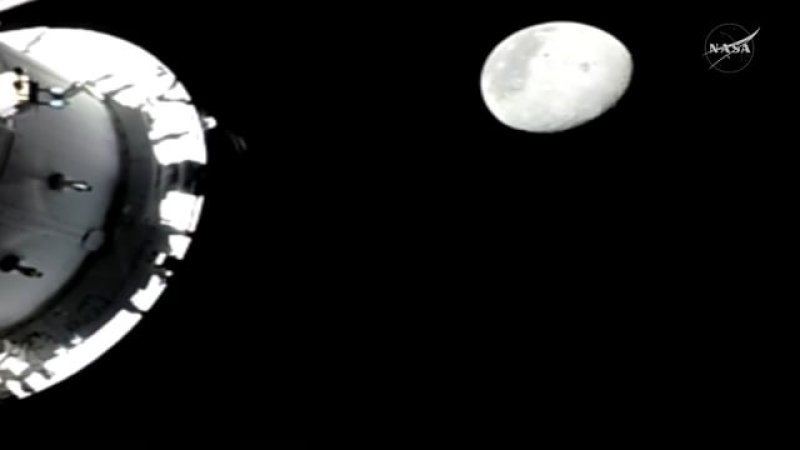











It will take them about four days to journey back, with a splashdown in the Pacific Ocean off the west coast of the US expected at 20:07 eastern US time 10 April (01:07 BST 11 April).
Teams will collect the astronauts from the water in helicopters and take them to the a nearby US Navy ship.
They will have medical checks aboard the ship as they head back towards land, Nasa says.
The Artemis II astronauts are bound for Earth after conducting a historic lunar fly-by and witnessing a total solar eclipse from their spacecraft
Commander Reid Wiseman says the Orion spacecraft crew "saw sights that no human has ever seen", while pilot Victor Glover says there are "no adjectives" to describe what they observed
The spacecraft reached its maximum distance from Earth - 252,756 miles (406,771km) - during the lunar fly-by. The crew had already broken the previous record for the furthest distance humans have travelled into space
The astronauts lost connection with Nasa while behind the Moon - the outage was expected and lasted around 40 minutes
"It is so great to hear from Earth again," said mission specialist Christina Koch as she broke the silence from the spacecraft
US President Donald Trump tells the astronauts that they have "made history and made all America really proud" - and invites them to the White House
The astronauts are due to splashdown in the Pacific Ocean off the west coast of the US at 20:07 eastern US time on Friday (01:07 BST Saturday)