
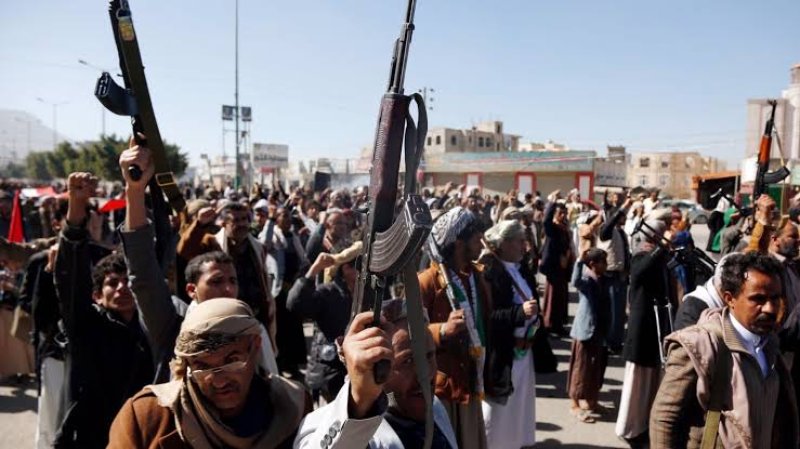











The Strait of Hormuz has been effectively closed for a month. The Houthis can threaten another critical chokepoint - the Bab al-Mandab Strait connecting the Red Sea and the Indian Ocean.
Bab al-Mandab translates as Gate of Tears, because of its challenging navigation. It is 29 kilometers (18 miles) across at its narrowest point.
More than 30 million tonnes of natural gas passed through the Strait in the first 11 months of 2023, as well as vast amounts of container traffic and 12% of total seaborne-traded oil, according to the US Energy Information Agency.
But the Houthis then began targeting merchant ships in the Red Sea after Israel launched military action in Gaza following the October 7 attacks. More than 100 ships were struck before the Houthis declared a pause in attacks last November.
Those attacks forced hundreds of vessels to reroute around the Cape of Good Hope, lengthening voyage times and cost.
An Iranian source told the country’s semi-official Tasnim News warned that if US forces tried to reopen the Strait of Hormuz, “they should be careful not to add another strait to their challenges … Iran is fully prepared to escalate the situation.”
Since traffic through Hormuz was severely curtailed, Saudi Arabia has begun re-routing its oil exports to the port of Yanbu on its west coast through a pipeline that is capable of handling 7 million barrels a day. Tanker traffic in the Red Sea has spiked as a result.