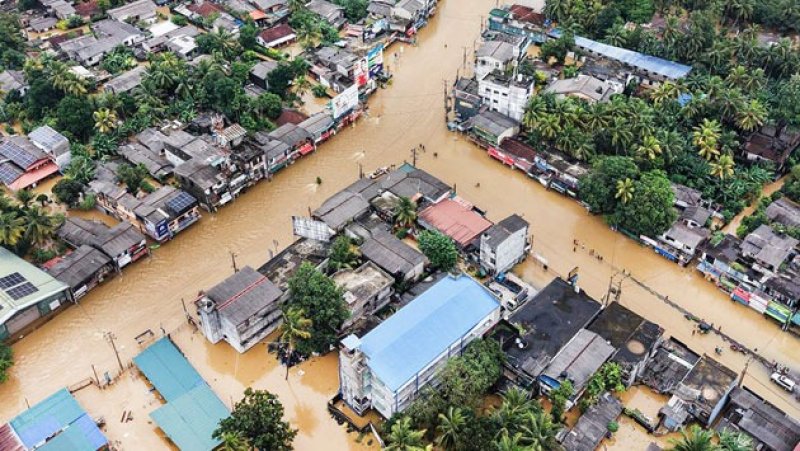
According to the report, an analysis by the World Weather Attribution group revealed that the extreme five-day rainfall associated with Cyclone Ditwah was between 28 percent and 160 percent more intense than it would have been without human-induced global warming of about 1.3°C above pre-industrial levels.
The report also noted that sea surface temperatures in the North Indian Ocean were about 0.2°C higher than the 1991–2020 average during the period, providing additional heat and moisture that amplified rainfall and increased the risk of flooding.
Greenpeace South Asia said Cyclone Ditwah should not be seen as an isolated weather event but rather as part of a broader pattern of climate change-driven disasters affecting the region.
Unlike typical cyclones that mainly cause damage through strong winds in coastal areas, the report said Ditwah caused widespread destruction largely due to prolonged and intense rainfall.
The slow-moving low-pressure system lingered over Sri Lanka for several days, resulting in heavy precipitation that flooded districts, disrupted infrastructure and triggered landslides.
The most severe impacts were reported in inland areas, particularly in the central highlands, where continuous rainfall caused soil saturation and significantly increased landslide risks, even in locations not previously identified as high-risk zones.
The report added that such developments are consistent with findings of the Intergovernmental Panel on Climate Change (IPCC), which has warned that extreme precipitation events are likely to become more frequent and intense as global temperatures continue to rise.