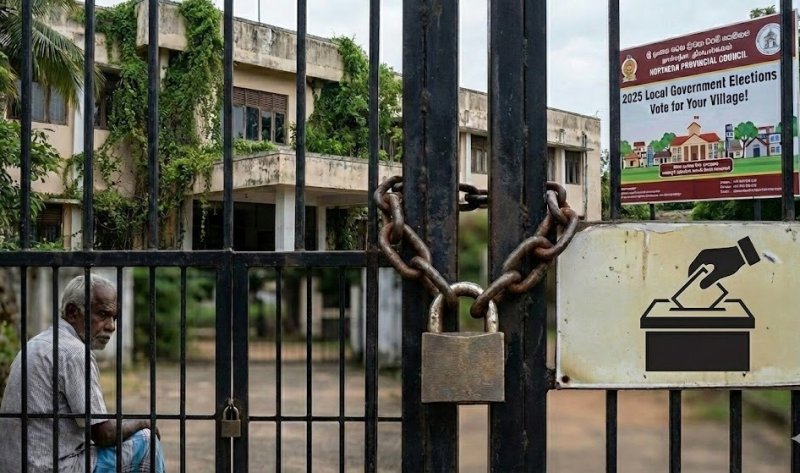
Despite the successful conclusion of the Local Government elections in May 2025, Sri Lanka’s Provincial Council (PC) system remains paralyzed, with elections now delayed for nearly nine years.
As the government of President Anura Kumara Dissanayake moves into its second year, pressure is mounting to resolve the legal deadlock that has left the country’s second tier of government under the sole authority of centrally appointed Governors.
The terms of the nine Provincial Councils expired between 2017 and 2019. Since then, no elections have been held, leaving the provinces without elected representatives.
The root of the delay lies in the Provincial Councils Elections (Amendment) Act No. 17 of 2017, passed during the Yahapalana government. The Act sought to introduce a mixed electoral system but inadvertently created a legislative trap. The required delimitation report—essential for the new system—was defeated in Parliament, and the review committee appointed to fix it failed to provide a solution.
As a result, the Election Commission has been legally barred from calling elections under the new act, while the old system was effectively repealed, leaving the process in limbo.
Hopes were high that the Provincial Council polls would follow the Local Government elections held on May 6, 2025, where the ruling National People's Power (NPP) secured a victory, winning 265 out of 339 councils.
However, eight months later, the government has yet to table the necessary amendments to unlock the PC elections. With the NPP commanding a supermajority in Parliament following the November 2024 General Election, legal experts argue that the government has the legislative power to either finalize the new system or revert to the old Proportional Representation system with a simple majority vote.
Critics point out that the continued delay undermines the 13th Amendment to the Constitution. For nearly a decade, provincial administration has been handled entirely by Governors appointed by the President, effectively recentralizing power that was meant to be devolved.
"The provincial council system is the primary mechanism for power sharing in this country," said a spokesperson for the main opposition, the Samagi Jana Balawegaya (SJB). "We proved we could hold the Local Government polls in 2025. There is no financial or logistical excuse to keep the Provincial Councils shuttered."
Government sources said that the delay is no longer political but procedural. Leader of the House, Minister Bimal Rathnayake, has previously said that the government intends to hold all scheduled elections. However, the administration is reportedly weighing whether to proceed with the contentious mixed electoral system or revert to the old system to expedite the process.
With the 2026 political calendar advancing, election monitors and civil society groups are urging the government to announce a clear timeline, warning that a continued delay risks normalizing a "democracy without councils" in Sri Lanka's provinces.