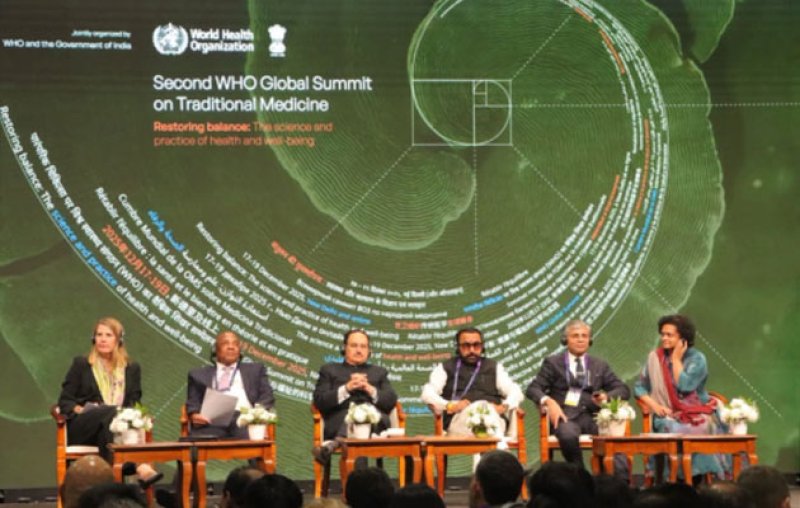
The World Health Organization (WHO)’s Second Global Summit on Traditional Medicine began December 17 in New Delhi, India.
The World Health Organization (WHO)’s Second Global Summit on Traditional Medicine began December 17 in New Delhi, India.
The three-day summit is being held from December 17 to 19 at Bharat Mandapam, and brings together government ministers, scientists, indigenous leaders and traditional medicine practitioners from more than 100 countries.
The summit is organized by the WHO in collaboration with the Ministry of Ayush, Government of India, with the aim of advancing evidence, integration and innovation in traditional medicine worldwide.
During the conference, key scientific initiatives and new global commitments are expected to be announced to support the implementation of the WHO’s Global Traditional Medicine Strategy 2025–2034. The strategy focuses on strengthening scientific evidence, improving regulation, integrating traditional medicine into health systems, enhancing collaboration, and encouraging community participation.
Traditional medicine includes both codified and non-codified systems that have evolved alongside modern biomedicine. For many communities, it remains the primary source of healthcare due to its accessibility, affordability and cultural relevance.
According to WHO data, around 90% of member states—170 out of 194 countries—report that between 40% and 90% of their populations use traditional medicine in some form.
Speaking on the importance of the sector, Shyama Kuruvilla, Director of the WHO Global Centre for Traditional Medicine, said developing traditional medicine is “an evidence-based, ethical and environmental imperative.”