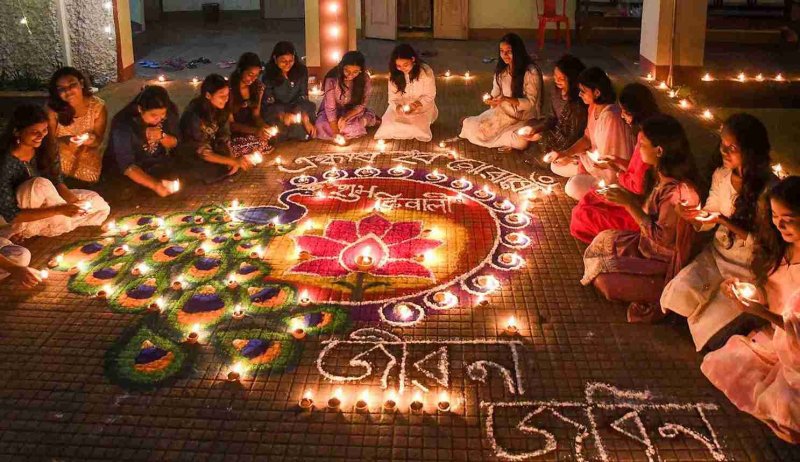
Deepavali has been officially inscribed on UNESCO’s Representative List of the Intangible Cultural Heritage of Humanity, at the twentieth session of the Intergovernmental Committee for the Safeguarding of the Intangible Cultural Heritage.
Deepavali is celebrated annually as one of the most popular festivals, uniting communities, families and individuals across the length and breadth of India and the diaspora.
Within communities, elders – inclusive of all genders – play a vital role as custodians of Deepavali and the conduits of intergenerational transmission, while the young adults and children inherit this living heritage. This living heritage provides livelihood support to creative communities and cultural practitioners who continue to enrich it through their diverse artistic expressions.
Deepavali commemorates the victory of good over evil, the triumph of light, and the unity and diversity of the Indian diaspora around the world, as well as all those who appreciate Indian culture. In the spirit of Vasudhaiva Kutumbakam – the Indian belief that the whole world is one family, this festival celebrates our shared identity as a global family.
Shri Vivek AggarwalSecretary, Ministry of Culture, Government of IndiaDeepavali is more than just a festival – it is deeply rooted in Indian culture, and celebrated across India and all around the world. It unites people across India and the global diaspora. This inscription is a recognition for all people who keep this heritage alive – the elders who safeguard and pass on this knowledge and young people who carry it forward with creativity and pride.
Tim CurtisDirector & Representative, UNESCO Regional Office for South AsiaThe twentieth session of the Intergovernmental Committee for the Safeguarding of the Intangible Cultural Heritage (20.COM) is taking place from Monday 8 to Saturday 13 December 2025 in New Delhi, India. The session is chaired by H.E. Mr Vishal V. Sharma, Ambassador and Permanent Delegate of India to UNESCO.
To enrich and complement the 20.COM, a series of exhibitions and side events on the theme of living heritage safeguarding are being organized at the Red Fort, or Lal Qila, the official venue of the intergovernmental meeting.
To safeguard the living heritage transmitted by communities across generations, UNESCO adopted the Convention for the Safeguarding of Intangible Cultural Heritage in 2003. Intangible Cultural Heritage, or living heritage, includes oral traditions and languages, performing arts, social practices such as rituals and festivals, traditional craftsmanship, and knowledge about nature and the universe.
From the triple planetary crisis – climate change, biodiversity loss, and pollution – to rapid social change, living heritage faces growing threats. Safeguarding it is vital as it is central to maintaining our cultural diversity. Understanding and sharing the living heritage of different communities also builds mutual respect.
To advance implementation of the 2003 Convention, UNESCO convenes an annual meeting of Member States and cultural bodies. The Intergovernmental Committee oversees the Convention’s implementation by reviewing nominations, guiding best practices, recommending safeguarding measures, and managing international assistance and the Convention Fund. India ratified the Convention in 2005, marking two decades of engagement. With its vast array of festivals, oral traditions, crafts, performing arts and knowledge systems, India provides a dynamic and active role in promoting community-led safeguarding and in reflecting on the future of living heritage