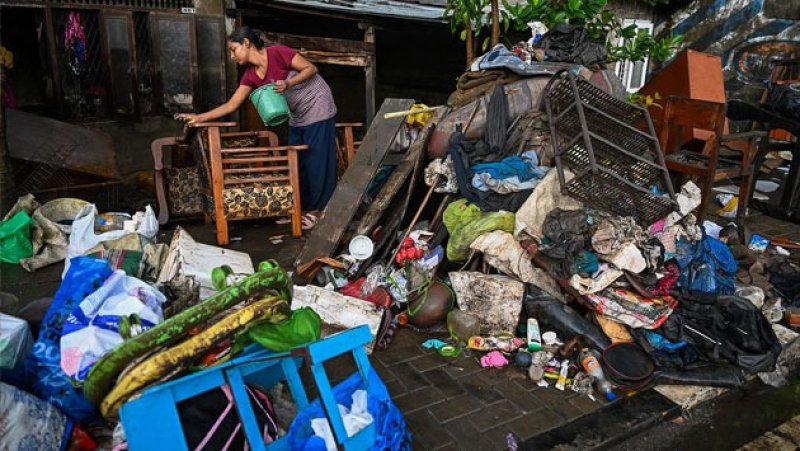
The Central Environmental Authority (CEA) has introduced temporary guidelines for managing waste generated in the aftermath of Cyclone Ditwah, covering hazardous, solid, clinical and electronic waste.
According to the CEA, these guidelines are specific to disaster-related waste and do not replace the standard waste management regulations that remain in force under normal conditions. The criteria have already been distributed to local government authorities for implementation.
The guidelines aim to reduce pollution caused by cyclone-related debris, minimise risks to public health and the environment, and help restore normal life as quickly as possible.
Under the new criteria, solid waste—including food waste, paper, cardboard, plastics, metals, clothing, glass, construction debris and general waste—must be managed according to specified procedures. Separate guidelines have been issued for chemical and hazardous waste generated by agrochemical shops, pharmacies, hospitals, medical centres, and factories.
In addition, a special programme for the collection and disposal of electronic and electrical waste has been launched in coordination with local authorities. Local councils have been provided with a list of CEA-registered institutions and authorised hazardous waste management facilities. Households with damaged electronic items are encouraged to hand them over through their local government’s programme.
The CEA also emphasised that all personnel involved in waste management, regardless of the type of waste, must be equipped with personal protective equipment.
For further information, the public may contact:
Ms. Manuja Priyadarshani, Director, Solid Waste Management Unit, CEA – 0718163356
Mr. Tissa Gamage, Director, Chemical and Hazardous Waste Management Unit, CEA – 0714395393
Additional details are available through the CEA’s Provincial and District Offices, with contact numbers listed on the official website: www.cea.lk