Sri Lanka has once again refused to accept the external evidence-gathering mechanism established by UN Human Rights Council resolutions 46/1 and 51/1, citing significant legal and political implications for all nations involved.
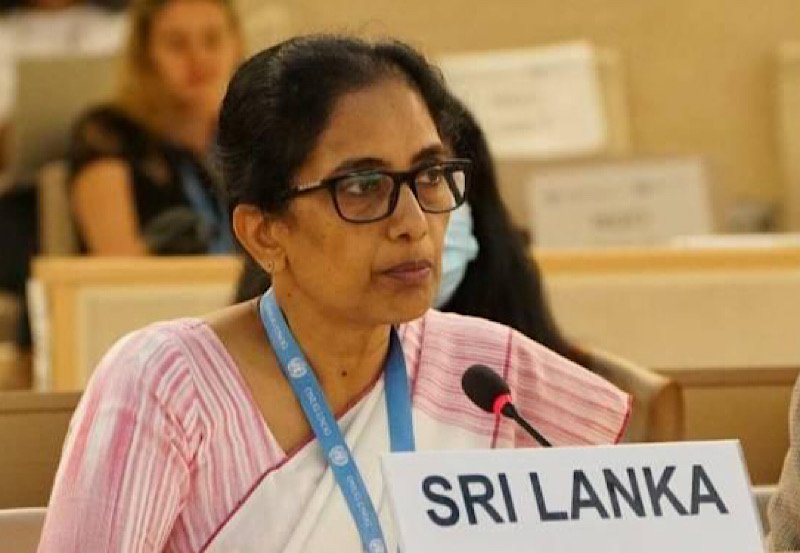
“It is unhelpful and only serves to divide and further polarize communities in Sri Lanka, with no tangible benefits. It also prejudges the commitment of domestic legal processes and drains the scarce resources of member states,” said Himalee Arunatilaka, Ambassador and Permanent Representative of Sri Lanka to the United Nations in Geneva, during the ongoing 56th Session of the UN Human Rights Council.
Arunatilaka emphasized that challenging human rights situations worldwide must be assessed with impartiality, non-selectivity, objectivity, and without double standards, in line with the founding principles of the Council. “Sri Lanka strongly opposes arbitrary and unilateral action which is contrary to these principles. Exceeding the mandate given by Member States to the OHCHR and politicization could lead to erosion of confidence in the work of the OHCHR,” she added.
In addition, Sri Lanka welcomed the progress reported by China during the recent 4th cycle of its Universal Periodic Review (UPR). “We note the enormous progress made by China in uplifting the lives of the Chinese people, which enhances the meaningful realization of their economic, social, civil, and political rights,” Arunatilaka stated.