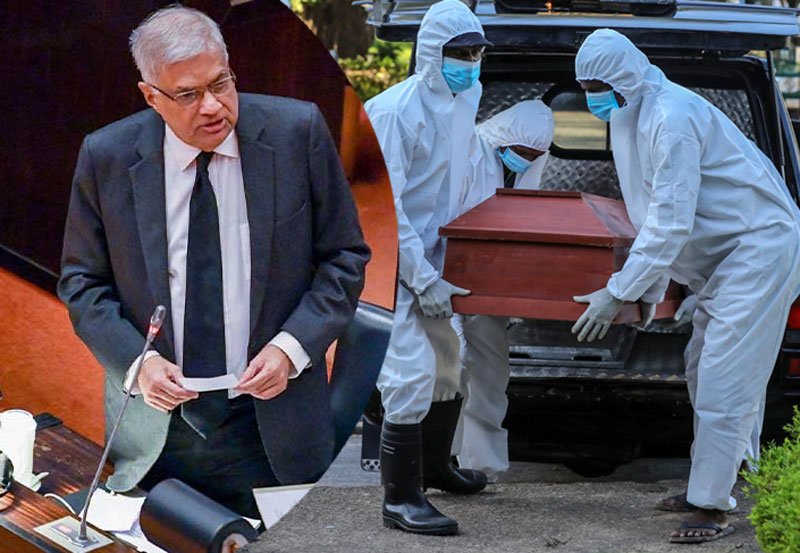
President Ranil Wickremesinghe issued a formal apology for the Sri Lankan government's controversial policy mandating cremations of COVID-19 victims, regardless of their religious beliefs.
The policy, enforced during the pandemic, sparked widespread criticism from both local and international communities, including the United Nations and human rights organizations.
President Wickremesinghe emphasized the importance of individual rights in determining funeral rites, stating, "Every person should have the right to decide whether they prefer burial, cremation, or donation to medical institutions."
The issue stemmed from the government's decision under the previous administration led by Gotabaya Rajapaksa to mandate cremations as a precautionary measure against the spread of the virus. This decision particularly affected Muslim and Christian communities, whose religious practices mandate burial.
Acknowledging the pain caused by this policy, President Wickremesinghe expressed regret, especially noting the distress experienced by affected communities. He highlighted the initial justification for the policy, which was based on recommendations from a committee and supported by a Supreme Court ruling.
"Now that the crisis has passed, we are moving forward," President Wickremesinghe stated, announcing plans to introduce legislation that guarantees the right to choose burial, cremation, or donation to medical institutions. He urged Parliament's support for this upcoming bill, which aims to uphold fundamental rights and address past grievances.