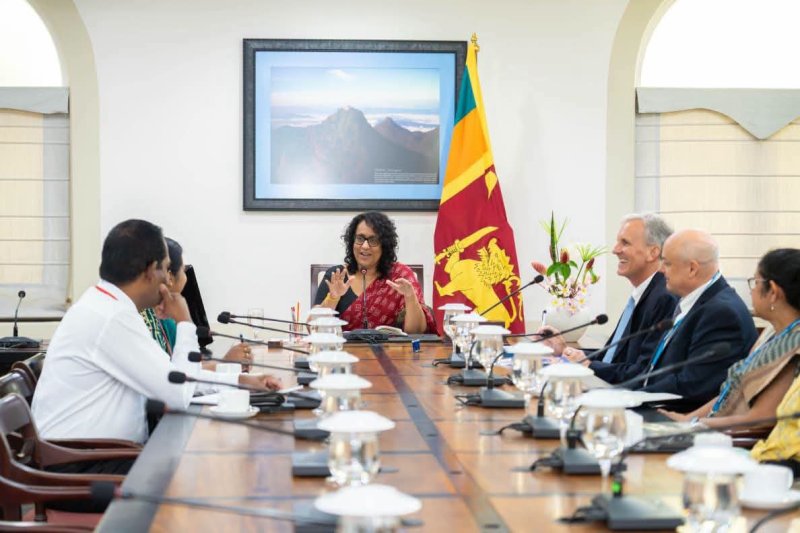
The World Food Programme has reaffirmed its commitment to strengthening school nutrition programmes in Sri Lanka following a meeting with Prime Minister and Education Minister Harini Amarasuriya at Temple Trees today (24).
During the meeting, WFP representatives expressed their readiness to continue working with the Government of Sri Lanka and highlighted the importance of collaboration with ministries, universities, UN agencies and other stakeholders to advance nutrition interventions in the school system.
Prime Minister Amarasuriya stressed that nutrition remains a major concern and emphasized the need to promote healthier eating habits while strengthening primary and preventive healthcare.
She noted that the government’s school nutrition programme is already being implemented in targeted schools and among identified families, with interventions also introduced at the early childhood level.
The Prime Minister also raised concerns over the increasing prevalence of non-communicable diseases (NCDs), stressing the need to identify and address their underlying causes.
She emphasized that the government’s approach should go beyond providing free meals, focusing instead on nutrition awareness, healthier dietary practices and long-term behavioural change among schoolchildren.
WFP representatives echoed these priorities, stressing the importance of collaboration and evidence-based decision-making. They noted that nutrition and health policies should be guided by reliable research and a clear understanding of the root causes of nutritional challenges and NCDs.
The meeting was attended by WFP Representative and Country Director Philip Ward, Deputy Country Director and Head of Programmes Robert Oliver, Professor Jayashree Arcot of the University of New South Wales, Sydney, along with officials from the Ministry of Education and WFP.