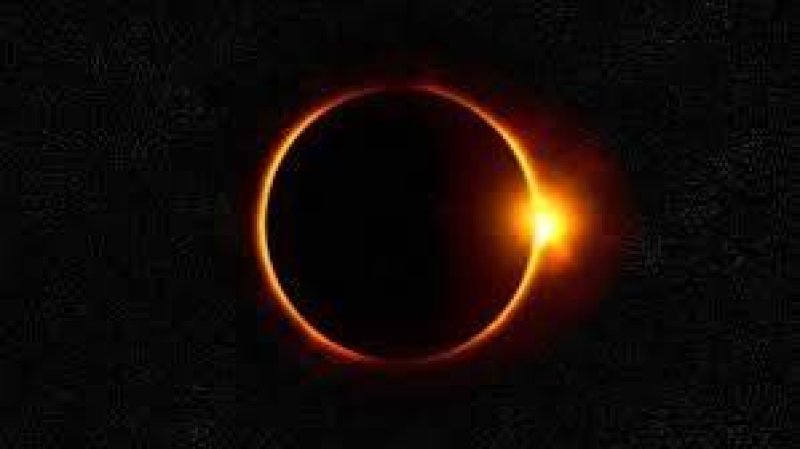
Today, millions of people across Europe will get the chance to experience their first total solar eclipse in 27 years.
Starting at 15:34 GMT, the brightness of the daylight hours will gradually be interrupted as the moon begins to block the sun, eventually turning day into sudden night for about two minutes along the path of totality. AlJazeera reported.
which countries will see it? How do solar eclipses occur? Where and how can you watch it safely? In this visual explainer, Al Jazeera unpacks everything you need to know.
What time is the solar eclipse?
The time of the eclipse depends on where you are because the moon’s shadow will move across Earth’s surface from the Arctic towards Europe.
Here is how today’s eclipse will unfold:
15:34 GMT: The partial eclipse begins at the first location on Earth.
16:58 GMT: The total solar eclipse begins at the first location.
17:46 GMT: The eclipse reaches its maximum with totality lasting about two minutes and 18 seconds near the centre of its path.
About 17:48 GMT: The eclipse reaches its maximum in Reykjavik, Iceland.
About 18:27 GMT: Totality reaches Spain.
18:34 GMT: The total eclipse phase ends globally.
19:58 GMT: The partial eclipse ends at the last location on Earth.
Which countries will see the eclipse?
The path of totality, which is when the moon orbits in front of the sun and blocks its entire surface facing Earth, will cross northern Russia, Greenland and Iceland before sweeping across Spain and a small part of Portugal, bringing almost total darkness to about 15 million people.