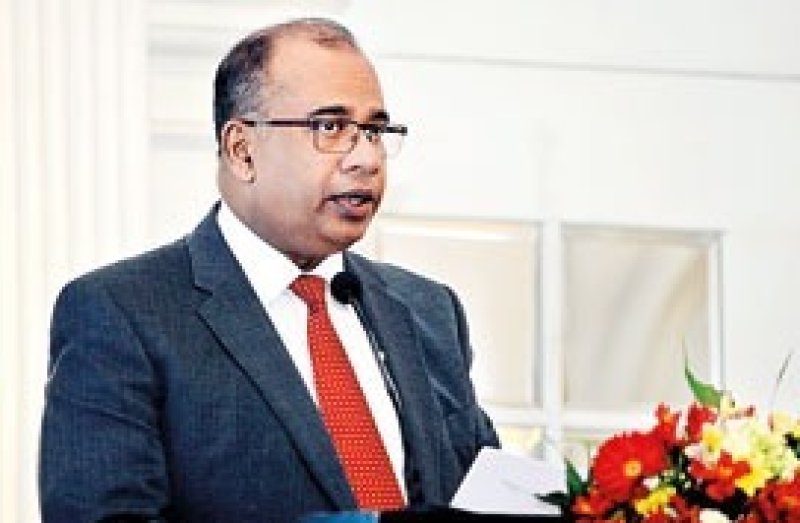
Supreme Court Justice Yasantha Kodagoda has raised serious concerns over prolonged delays in Sri Lanka's judicial system, revealing that an average partition case takes 47 years to reach its conclusion, while criminal cases can take more than 10 years to complete the first stage of the legal process.
Speaking at the launch of a legal journal organised by the Homagama Lawyers' Association, Justice Kodagoda said Sri Lanka's courts are struggling under an overwhelming caseload, with around 1.1 million pending lawsuits and appeals currently awaiting adjudication across the country.
Addressing an audience that included High Court and District Court judges, magistrates and legal professionals, he noted that the country has only 333 courts, leaving each court to handle an average of 3,303 cases. He said the figures underscore the urgent need to strengthen both the judiciary and its administrative support system.
Highlighting the impact of judicial delays, Justice Kodagoda cited a 2013 survey showing that the first cycle of a criminal case takes an average of 10 years and two months to conclude. Illustrating the point, he said that if a house burglary were reported today and successfully investigated by police, the case would only be expected to complete that stage of the legal process around August 2036.
The delays are even more severe in civil litigation, he said. Referring to six recent partition cases decided by the Supreme Court, Justice Kodagoda stated that the average time taken from the filing of a case in the District Court to the execution of the final appeal judgment was 47 years.
He also highlighted the financial burden lengthy litigation places on litigants, saying legal costs often become a heavy strain on families over the years.
Justice Kodagoda further observed that neither the government nor the Supreme Court has the authority to regulate lawyers' fees. Instead, he urged members of the legal profession to determine their fees responsibly, taking into account the financial circumstances of their clients. He also suggested that the Bar Association of Sri Lanka should initiate discussions on the issue.
Calling for a broader change in legal practice, Justice Kodagoda said lawyers should not view litigation as the default solution for every dispute, arguing that excessive reliance on court action has contributed significantly to the country's growing backlog of cases. He stressed the need for reforms to improve efficiency and restore timely access to justice.