Researchers say nearly 125 of the recorded species are being documented in Sri Lankan waters for the first time, while between 50 and 100 species could potentially be entirely new to science pending scientific and genetic analysis.
The survey highlighted the rich biodiversity of Sri Lanka’s marine ecosystem, with several rare deep-sea and coral reef species among the discoveries.
Guest fish taxonomist Sergey Bogorodsky played a key role in documenting the species identified during the expedition.
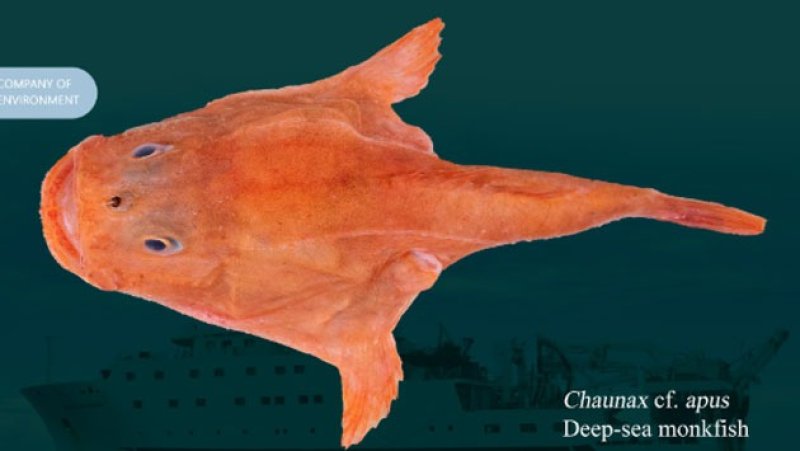
Among the most notable discoveries was Chaunax cf. apus, a deep-sea monkfish found at depths of 200 to 250 metres. Researchers believe the specimens found in Sri Lankan waters may represent a previously unknown species due to differences from currently recognised species.
The survey also recorded Anoplogaster cornuta, commonly known as the fangtooth, a deep-sea species recognised for its unusually large teeth and found at depths of 50 to 600 metres.
Another major finding was Bufoceratias thele, a rare deep-sea anglerfish belonging to the Diceratiidae family. Researchers noted that this is the first recorded sighting of the species in the Indian Ocean. The fish is known for its glowing lure used to attract prey in deep waters between 300 and 1,500 metres.
The team also encountered Xiphias gladius or swordfish, a fast-moving predatory species rarely caught during such surveys due to its speed. The specimen recorded measured approximately 2.5 metres in length.
Among the coral reef species identified were the colourful emperor angelfish (Pomacanthus imperator) and Pseudanthias pillai, a brightly coloured reef fish recorded in Sri Lankan waters for the first time after previously being identified only in Indian waters about a decade ago.
Researchers say the findings further demonstrate the ecological importance of Sri Lanka’s marine environment and the need for continued scientific exploration and conservation efforts.