The Ministry of Agriculture, Animal Resources, Lands, and Irrigation has announced a National Census on Wildlife Causing Damage to Crops, which will take place on March 15, 2025.
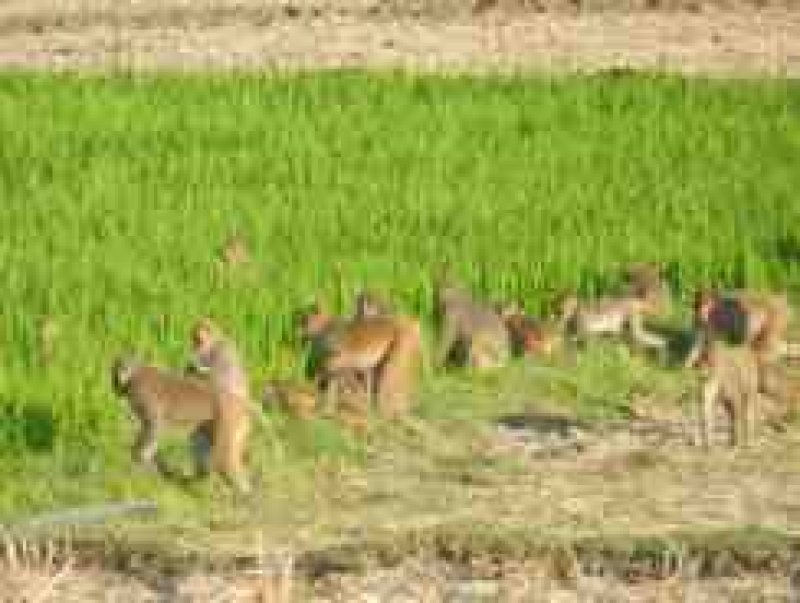
The major wildlife responsible for crop damage have been identified as elephants, wild boars, monkeys, porcupines, wild dogs, and rodents. These issues also contribute to human-wildlife conflicts and extensive property destruction.
The census aims to assess the number of wildlife species causing damage to crops, including wild boars, porcupines, wild dogs, and monkeys. The primary objective is to gather data to support policy decisions and interventions based on evidence, while also ensuring the protection of Sri Lanka's high biodiversity and offering assistance to affected communities.
The census is planned for March 15, 2025 (Saturday). During the period from 8:00-8:05 AM, individuals are requested to observe their home gardens, farms, schools, religious sites, and other public areas, and count the number of wild boars, porcupines, wild dogs, and monkeys present in their vicinity. This data should be recorded on the census form.
The census will be conducted at the village level, coordinated by the village officers (Grama Niladharis) with the support of Samurdhi Development Officers, Economic Development Officers, and Agricultural Research and Production Assistants.
The responsibilities include disseminating information, distributing census forms to homes and other locations, and collecting the forms after the census is completed. These duties will be overseen by the Grama Niladharis, Samurdhi Development Officers, Economic Development Officers, and Agricultural Research and Production Assistants.
It is the responsibility of the community to ensure that the completed census forms are returned to the relevant Grama Niladharis, Samurdhi Development Officers, Economic Development Officers, or Agricultural Research and Production Assistants.
If other public institutions such as schools, religious sites, universities, or hospitals exist within the Grama Niladhari division, the Grama Niladhari should consult the institution heads and establish a plan for gathering relevant data. For large-scale farms, it may not be possible for an individual to gather the necessary data, so the Grama Niladhari will collaborate with the institution's staff to collect the information.
If landowners are not residing on their land or in the area, it would be appropriate to involve residents from nearby areas to collect the census data for such lands or sites.
National-level awareness campaigns will be conducted using print, electronic, and social media channels to promote participation in this census, as stated by the Ministry of Agriculture, Animal Resources, Lands, and Irrigation.