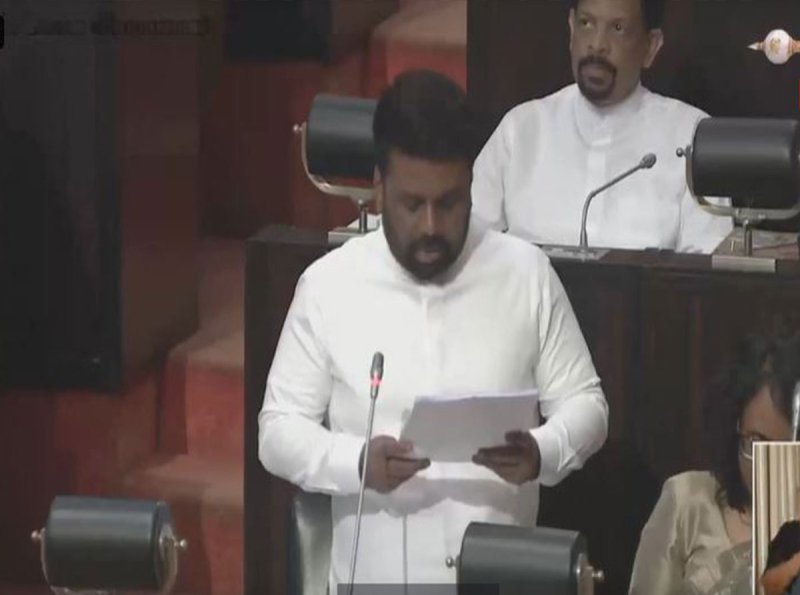
The President announced that the liberalization of motor vehicle imports, effective from 1st February 2025, is expected to be a major contributor to Sri Lanka's revenue growth for the year 2025.
The government will not pursue the Imputed Rental Income Tax, which was agreed upon by the previous administration.
Introduction of Point-of-Sale (POS) machines across VAT-registered businesses to promote digital transactions, reduce cash dependency, and enhance tax transparency.
The President outlined that the government aims to meet a revenue target of 15.1% of GDP in 2025 through tax reforms and digitalization of the tax system.
Pension hikes for retirees before 01 January 2020 will be implemented in three phases.
Daily wages for plantation workers will be increased to Rs. 1,700.
Employers’ Associations have agreed to raise the private sector minimum wage from Rs. 21,000 to Rs. 27,000 in April 2025, with further increases planned for 2026.
The basic salary for public sector employees will rise from Rs. 24,250 to Rs. 40,000 in three phases.
Recruitment, promotions, and transfers in the public service will be based on qualifications and skills, and Rs. 10,000 million will be allocated to fill essential vacancies.
Rs. 1,000 million allocated for the renovation of low-income housing schemes and Rs. 1,500 million for resettlement programs.
A new cultural festival will be launched in December to boost tourism, with private sector assistance.
Rs. 640 million allocated to improve electric fencing and provide compensation for victims of elephant-human conflicts.
Rs. 5,000 million will be invested in the Clean Sri Lanka initiative.
Rs. 3,000 million allocated to procure 100 low-floor buses, and Rs. 500 million for the rehabilitation of old railway coaches.
Rs. 20 billion will be allocated for debt settlement, with SriLankan Airlines to handle future profitability.
Rs. 15 billion allocated for higher interest rates for senior citizens, with an additional 3% annual interest on fixed deposits.
Rs. 1,000 million allocated to supply dry rations during the April festive season.
Rs. 250 million will be allocated to expand awareness and counselling services for young people, especially to address suicide rates.
Compensation for victims of natural disasters will be increased from Rs. 250,000 to Rs. 1 million.
Monthly allowances for kidney patients will be raised from Rs. 7,500 to Rs. 10,000, and senior citizen allowances will also rise.
Rs. 2,500 million for the dairy sector, and Rs. 500 million to cultivate coconut in the Northern Coconut Triangle.
Rs. 232.5 billion allocated for social welfare programs.
Collaboration with international partners to develop 61 oil storage tanks in Trincomalee for international fuel market access.
The government will amend the Paddy Marketing Board Act, with Rs. 5000 million allocated for purchasing paddy during the Maha season.
Proposed Sri Lanka Electricity (Amendment) Act to be introduced.
Increase in allowances for Grade 5 Scholarship students and Mahapola Scholarships, with Rs. 135 billion allocated for university development.
Rs. 604 billion allocated for healthcare in 2025, with additional funds for children’s healthcare and the purchase of medical equipment.
Rs. 1,000 million for school infrastructure and Rs. 500 million for reviewing the school system.
Parliamentarians will not receive vehicles or vehicle permits this year due to lack of allocated funds.
All luxury vehicles owned by the government will be auctioned in March 2025.
The President emphasized a commitment to preventing corruption, pledging that anyone involved in bribery should be afraid of the consequences.
- The President announces the establishment of a State Development Bank to support Small and Medium-scale Enterprises (SMEs) under the current state banking system.
- Rs. 500 million allocated for the development of cultural and historic destinations like Anuradhapura and Yapahuwa. A digital ticket system will also be introduced for tourist attractions.
- The Digital ID initiative will be a cornerstone of the country's economic digital development. New laws will be introduced to ensure data privacy and security.
- Rs. 3000 million allocated for digital development and the establishment of a Digital Economic Authority to facilitate the shift towards a cashless economy.
- Rs. 750 million allocated for a national quality management system to address port congestion and improve efficiency.
- Rs. 1,000 million allocated for upgrading scanning services at Colombo Port and Bandaranaike International Airport.
- Government-owned lands will be leased for productive economic use to boost the economy.
- Economic zones will be established to attract investment, with changes to the Economic Transformation Act to encourage new investors.
- A new National Tariff Policy will be introduced
- The government plans to introduce a new Customs Act by amending existing legislation.
- The 2025-2029 National Export Development Plan will be launched, with a focus on Economic Diplomacy.
- Projected goods and services exports to reach US$19 billion in 2025, contributing to economic growth.
- The government is preparing to resume debt repayments by 2028, focusing on transforming the economy.
- Emphasis on prudent and responsible management of limited tax funds.
- Highest ever allocation for education and health sectors, with 4% of GDP set for capital expenditure. Funds will also be directed to Senior Citizen interests.
- Financial allocations prioritized in the 2025 Budget to ensure economic stability and public benefit.
- A 5% Economic Growth target for 2025.
- Foreign reserves maintained at USD 6.1 billion by end of 2024, despite servicing USD 570 million debt during debt restructuring.
- Presentation of the 2025 Appropriation Bill, with total estimated government expenditure set at Rs. 4,218 billion for the year.