The Supreme Court has ruled that certain clauses of the Local Government Elections Special Provisions Bill are unconstitutional and must be passed by a special majority in Parliament. The ruling was delivered today during a special session convened by Parliament to hear the Court's opinion on the bill.
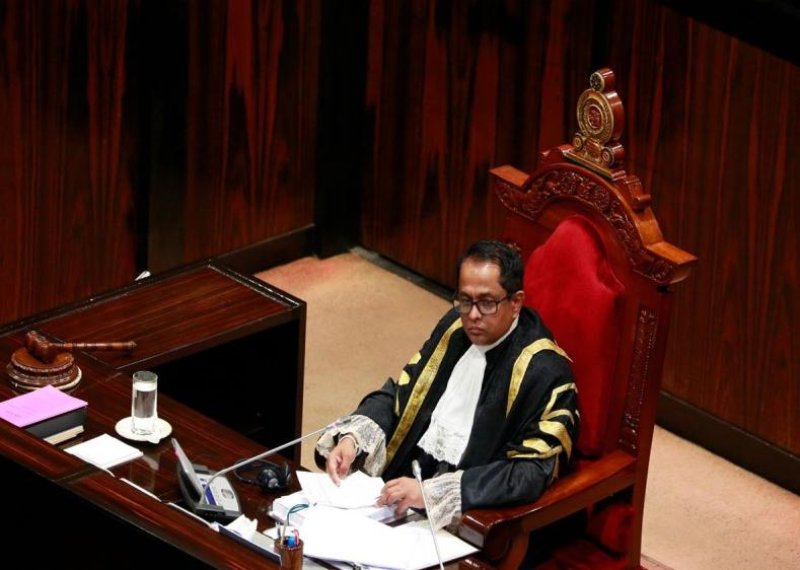
Speaker Jagath Wickramaratne informed Parliament of the Supreme Court's decision, marking a significant development in the legislative process. As per the Court's direction, these specific clauses will require the approval of a special majority in Parliament before they can proceed further.
Speaker informed Parliament of the relevant announcement,
I wish to inform Parliament that I have received the decision of the Supreme Court on the Bill entitled “Local Government Elections (Special Provisions)”, which was challenged before the Supreme Court in terms of Article 121(1) of the Constitution and heard before a three-judge bench.
Accordingly, two judges, constituting the majority of the bench, ruled: -
Since the Bill as a whole and in particular Sections 2 and 3 read as such are inconsistent with Article 12(1) of the Constitution, it is necessary to pass it only by a special majority vote in accordance with Article 84(2) of the Constitution.
The remaining judge on the bench had ruled: -
That this Bill, as a whole or any of its provisions, is not inconsistent with the provisions of the Constitution and therefore can be passed by a simple majority vote in Parliament.
"I order that the full decision of the Supreme Court be printed in the official record showing today's proceedings."
The bill, which aims to facilitate the smooth conduct of local government elections, has been under scrutiny for its constitutionality. The ruling today will require parliamentary leaders to reassess the contentious clauses and seek broader consensus to amend and pass them in accordance with the Court's guidance.
Members of Parliament are expected to discuss the implications of the ruling and plan their next steps accordingly. The government has expressed its commitment to complying with the Court's directions, ensuring that the legislative process remains transparent and in line with constitutional standards.