In response to the growing human-elephant conflict in Sri Lanka, a team of engineers from the National Engineering Research and Development Centre (NERDC) under the Ministry of Science, Technology, and Research have successfully designed an indigenous elephant trap system as a scientific solution.
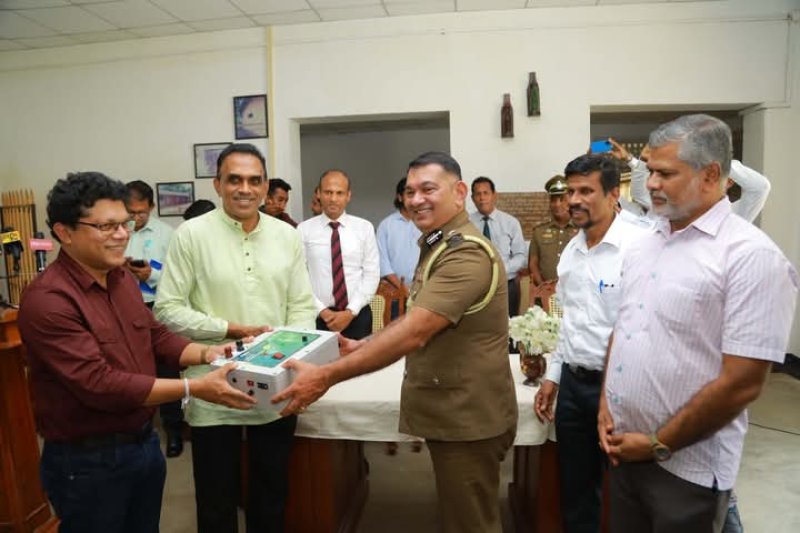
 The system was constructed as part of a pilot project at the Weerawila open camp and was handed over to the Department of Prisons in a ceremony attended by the Minister of Science, Technology, and Research, Krishantha Abeysekara, and the Minister of Environment, Dhamika Pathbidi.
 Elephant
Developed with the support of the private sector, this elephant trap system spans 3.8 kilometers and stands 16 feet tall. The trap is constructed using reinforced concrete technology, ensuring durability and safety.
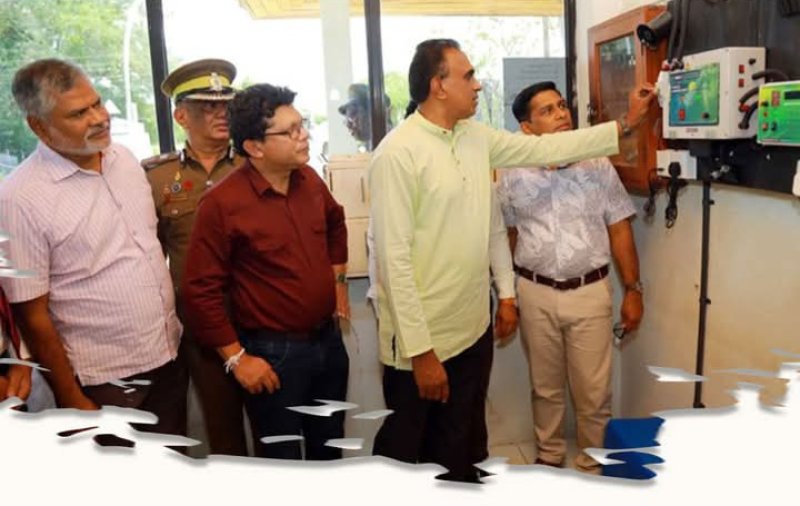
The system has several innovative features, including a short message service (SMS) alert that notifies the owner in the event of a malfunction or damage to the trap. A web page has also been created for monitoring and analyzing the trap’s reports. Unlike existing elephant trap systems, which are easily destroyed by elephants, this new design minimizes the risk of elephants causing damage or escaping.
Previously, Sri Lanka relied on imported foreign technology for elephant traps, incurring significant annual costs in foreign currency. However, this new system, developed using local resources, technology, and expertise, costs only a fraction of the price—approximately 1 million Sri Lankan Rupees—compared to the 5 million Rupees spent on similar imported systems.
This innovative elephant trap system is designed according to both national and international standards, offering a sustainable and cost-effective solution to the long-standing human-elephant conflict in Sri Lanka.