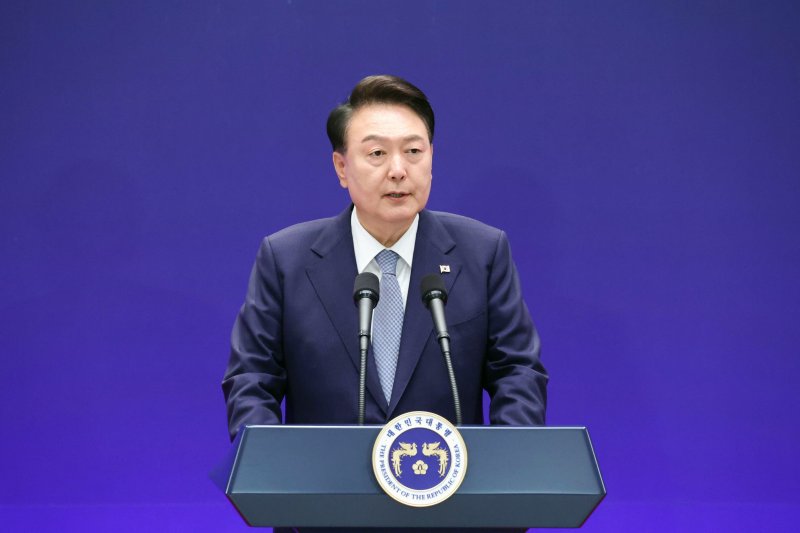
South Korean opposition parties on Wednesday filed a motion to impeach President Yoon Suk Yeol after he declared martial law only to reverse the move hours later, triggering a political crisis in Asia's fourth-largest economy.
The country's opposition parties – whose lawmakers jumped fences and tussled with security forces so they could vote to overturn the martial law – submitted a motion to impeach Yoon and demanded that he step down immediately over the attempted "insurrection".
"We've submitted an impeachment motion prepared urgently," representatives for six opposition parties including the main Democratic Party said at a live press briefing, adding they would discuss when to put it to a vote, but it could come as soon as Friday.
Impeaching Yoon would require the support of two-thirds of parliament for the motion and then the backing of at least six Constitutional Court justices.
Yoon's shock bid to impose South Korea's first martial law in over four decades plunged the country into its deepest turmoil in its modern democratic history and caught its close allies around the world off guard.
The US, which stations nearly 30,000 troops in South Korea to protect it from the nuclear-armed North, initially voiced deep concern at the declaration, then relief that martial law was over.
The dramatic developments also left the future of Yoon – a conservative politician and former star public prosecutor who was elected president in 2022 – in jeopardy.
The nation's largest umbrella labour union also called an "indefinite general strike" until Yoon resigned.
And the leader of Yoon's own ruling party described the attempt as "tragic" while calling for those involved to be held accountable.
Seoul's benchmark Kospi index fell by two percent on opening before limiting its losses a little in early trading on Wednesday morning.
The nation's largest umbrella labour union also called an "indefinite general strike" until Yoon resigned.
And the leader of Yoon's own ruling party described the attempt as "tragic" while calling for those involved to be held accountable.
Seoul's benchmark Kospi index fell by two percent on opening before limiting its losses a little in early trading on Wednesday morning.
Yonhap news agency then reported that Yoon's cabinet had approved the motion to lift the order.
The U-turn prompted jubilation among protesters outside parliament who had braved freezing temperatures to keep vigil through the night in defiance of Yoon's martial law order.
Demonstrators who had been waving South Korean flags and chanting "Arrest Yoon Suk Yeol" outside the National Assembly erupted in cheers.
Lim Myeong-pan, 55, told AFP that Yoon's decision to rescind martial law did not absolve him of wrongdoing.
Yoon's act of imposing it in the first place without legitimate cause is a serious crime in itself," Lim told AFP.
"He has paved his own path to impeachment with this."
Defying security forces, 190 lawmakers managed to get into the assembly in the early hours of Wednesday and unanimously voted to oppose martial law.
Under the constitution, martial law must be lifted when a majority in parliament demands it.