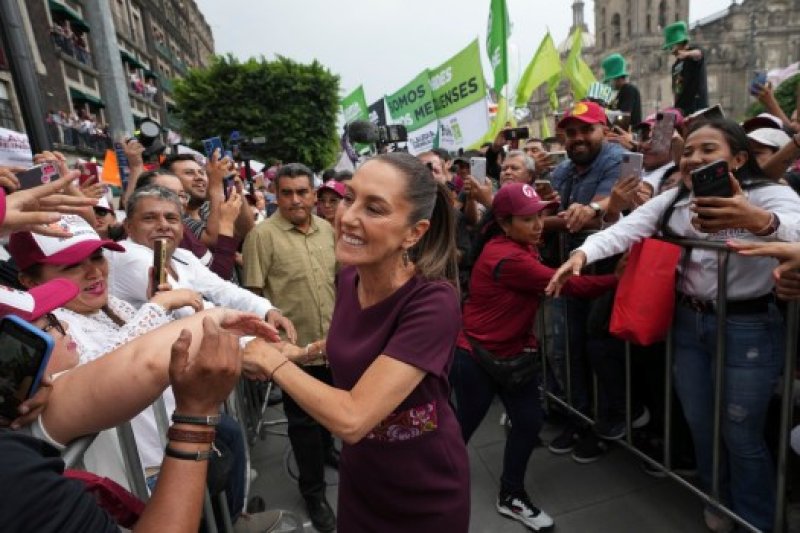
Parties selected their candidates well before the official start of campaigning for the presidential, congressional and municipal elections. On June 2, millions of voters will cast for their new leaders in a single round of voting. The winner of the highly anticipated presidential election will serve a six-year term.
While most eyes are on the presidential race, Mexicans will also vote for 128 senators, 500 congressional representatives and for nearly 20,000 local government positions.
Why has the campaign cycle been so violent?
Under López Obrador's "hugs not bullets" policy, which emphasizes addressing the societal root causes of violence, analysts say cartels and other criminal groups have expanded their control. Homicide rates have remained stubbornly high despite promises by López Obrador to ease the violence. López Obrador has in many cases refused to confront criminal groups, and activists say his government has tried to reduce the official count of Mexico's forcibly disappeared in the lead up to the election.
Cartels and other criminal groups see elections – particularly local elections – as an opportunity to make power grabs. They've warred for turf and at least 145 people tied to politics have been slain by organized crime this year, according to tracking by the human rights organization Data Civica.
Violence has been particularly severe in states where criminal groups are fighting for territory like Chiapas and Guerrero in the south, and Michoacan in central Mexico.
Mexico's first woman president
Electing a female president would be a huge step in a country with soaring levels of gender-based violence and deep gender disparities.
Mexico still has a famously intense "machismo," or culture of male chauvinism, that has created large economic and social disparities in society. In its most extreme form, the misogyny is expressed in high rates of femicides, and things like acid attacks against women.
Yet a historic number of women in the socially conservative country are taking up leadership and political roles.
That's in part due to a decades-long push by authorities for greater representation in politics, including laws that require political parties to have half of their congressional candidates be women. Since 2018, Mexico's Congress has had a 50-50 gender split, and the number of female governors has shot up.
Both frontrunner Sheinbaum and Gálvez have promised to address high rates of gender-based violence and gender disparities if they win.
VOA News