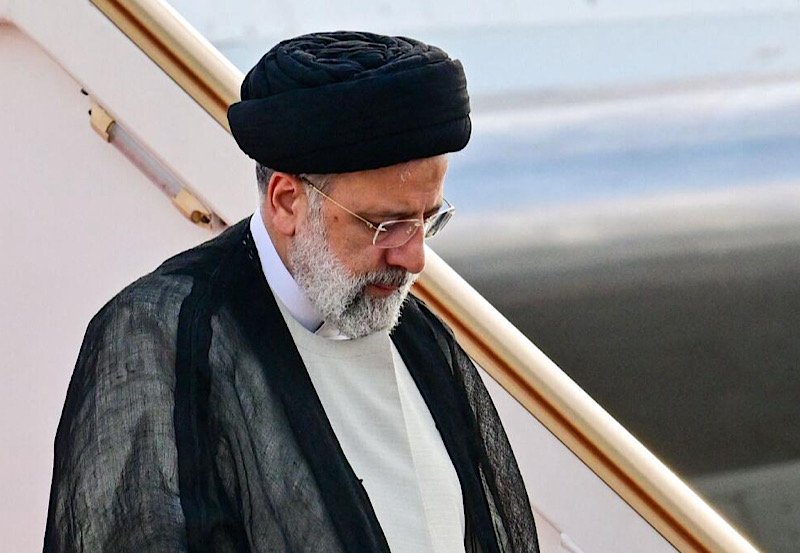
Iranian President Ebrahim Raisi has died after the helicopter he was travelling on crashed in a mountainous area in the northwest of Iran, according to reports.
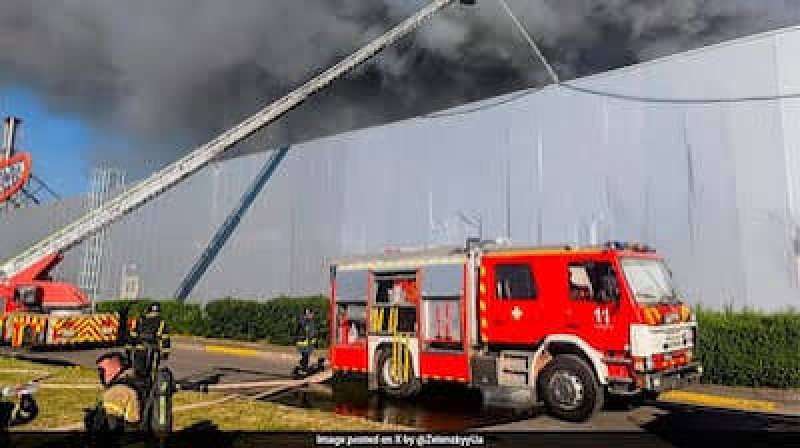
Rescue teams located the crash site on Monday morning, at which point the president and his foreign minister had been missing for more than 12 hours.
"President Raisi's helicopter was completely burned in the crash ... unfortunately, all passengers are feared dead," an official told Reuters.
Mr Raisi, 63, who was seen as a frontrunner to succeed Ayatollah Ali Khamenei as Iran's Supreme Leader, was travelling after a visit to the border with Azerbaijan when the helicopter crashed.
Iran's foreign minister, Hossein Amirabdollahian, the governor of East Azerbaijan province and other officials were also said to have been aboard the chopper when the crash, initially described as a "hard landing", happened amid fog on Sunday.
The chief of staff of Iran's army had ordered all the resources of the military and the elite Revolutionary Guard to be put to use in search and rescue operations, which had been hampered by the bad weather.- Sky News
The 63-year-old political heavyweight has long been regarded as the natural successor to Supreme Leader Ayatollah Ali Khamenei, the highest authority in Iran.
An established presence with deep connections in the judiciary and religious elite, Raisi – a hardline and religiously conservative politician – first ran for the presidency in 2017 but failed. He was eventually elected in 2021.
Early years
Raisi began studying at the renowned Qom religious seminary at the young age of 15, and proceeded to learn under several of the Muslim scholars of the time.
In his early 20s, he was appointed prosecutor in successive cities until he went to the capital Tehran to work as a deputy prosecutor.
In 1983, he married Jamileh Alamolhoda, the daughter of Mashhad’s Friday Prayer Imam Ahmad Alamolhoda. They went on to have two daughters.
For five months in 1988, he was part of a committee overseeing a series of executions of political prisoners, a past that has made him unpopular among the Iranian opposition and led to the United States imposing sanctions on him. In 1989, he was appointed prosecutor of Tehran after the death of Iran’s first Supreme Leader Ayatollah Ruhollah Khomeini.
Raisi continued to rise through the ranks under Khomeini’s replacement, Ayatollah Khamenei, becoming chairman of the Astan Quds Razavi, the biggest religious endowment in Mashhad, on March 7, 2016, which cemented his status in Iran’s establishment.
Running for president
Raisi first ran for president in 2017 against Hassan Rouhani, who was running for reelection. Rouhani had overseen the negotiation of Iran’s 2015 nuclear deal with world powers, restricting its nuclear programme in return for sanctions relief.
A critic of the 2015 deal – known as the Joint Comprehensive Plan of Action (JCPOA) – Raisi came from a more hardline bloc than Rouhani, who was seen as a political moderate within Iran’s political system.
After his defeat, Raisi began planning for his next presidential campaign. In June 2021, he won 62 percent of the vote, but the election was marred by a low turnout – 48.8 percent – after several reformists and moderates were prevented from standing.
By then, the JCPOA was in shambles after the US – under former President Donald Trump – unilaterally withdrew and reimposed sanctions on Iran, severely affecting its economy.