A tiny surgical robot in residence at the International Space Station completed its first surgery demo in zero gravity on Saturday, developers of the technology exclusively told CNN
The milestone is a step forward in developing technology that could have implications not just for successful long-term human space travel, where surgical emergencies could happen, but also for establishing access to medical care in remote areas on Earth.
The US goal of pushing exploration deeper into space includes the possibility of journeys that could take years — a round-trip to Mars could take about two years to complete, according to NASA.
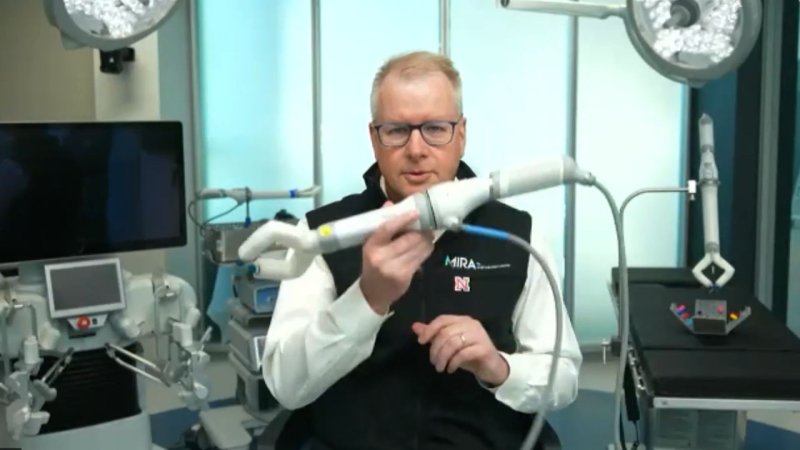
The robot is only 2 pounds (0.9 kilogram), and its compact microwave-size design makes it a lightweight instrument fit for space travel. With a portion of the device inserted into the body to perform surgery, the tool uses two arms to mimic the movements of a human — the left arm to grasp and right arm to cut, said Shane Farritor, cofounder and chief technology officer at Virtual Incision, the startup that created spaceMIRA.
The demonstration on Saturday called for the remote surgeon to control the robots’ hands to provide tension to the simulated tissue — made of rubber bands — and use the other hand to dissect the elastic tissue with scissors, Farritor said. A total of six surgeons performed remote tests with the robot, and each demonstration — dissecting the correct piece of tissue under pressure, a common surgical task, Farritor said — was deemed successful.
SpaceMIRA is 3 inches (7.6 centimeters) shorter than a counterpart designed for use on Earth to accommodate spaceflight constraints, but it has the same form and function, he said.
CNN