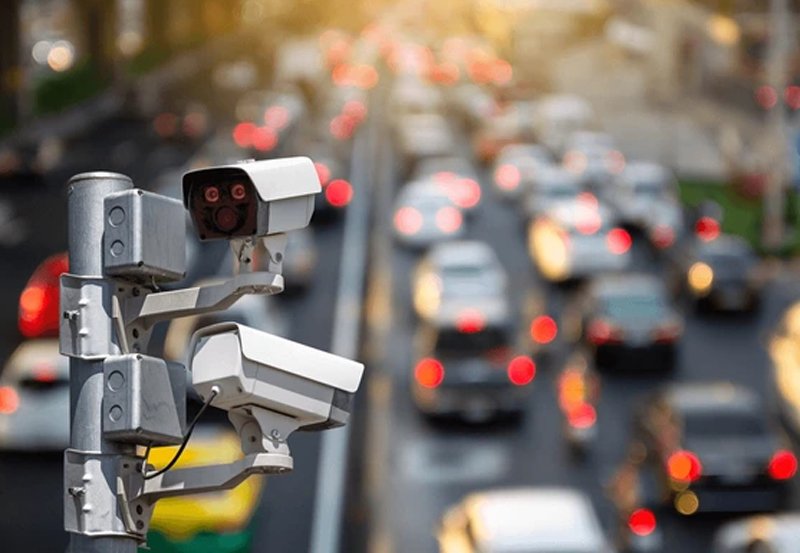
The initiative launched by the police to identify traffic offenders using CCTV cameras will be fully operational starting February 1, Director of Traffic Administration and Road Safety division DIG Indika Hapugoda, said.
The system will undergo as a pilot project in Colombo from January 22 to 28, during which no legal action will be taken against identified drivers.
Within the initial 36 hours of the pilot phase, nearly 300 traffic law violators were identified. During the period from January 28 to 31, a comprehensive review of the project will be conducted to identify weaknesses and enhance strategies. Legal action against road rule violators will commence from February 1, following this evaluation period, the DIG said.
DIG Hapugoda highlighted the challenges faced by traffic police, emphasizing the extensive road network in Sri Lanka, which spans around 119,350 km. With over 8.3 million registered motor vehicles, including 4.8 million motorcycles and 1.2 million trishaws, the current project aims to streamline and facilitate the demanding responsibilities of traffic police.
DIG (Telecom Engineering) Thushara Gamlath clarified that the process of identifying and notifying traffic law violators is not automated. Upon detecting a violation, a specific violation number is assigned, and video footage is extracted. Another officer then identifies the vehicle owner using the number plate information, accessing the Department of Motor Traffic's database. Notices are sent to relevant police stations, and the entire process is completed within a day.
Responding to criticisms, particularly from bus owners' associations, DIG Hapugoda addressed concerns about the Bus Priority Lane (BPL). He explained that despite most roads having only two lanes, there are functioning BPL areas in the country. Hapugoda mentioned a successful BPL from the Polduwa Junction to Lotus Tower operational during specific hours, highlighting its success despite challenges. However, he acknowledged concerns raised by three-wheeler drivers and emphasized the importance of maintaining traffic flow in designated lanes.