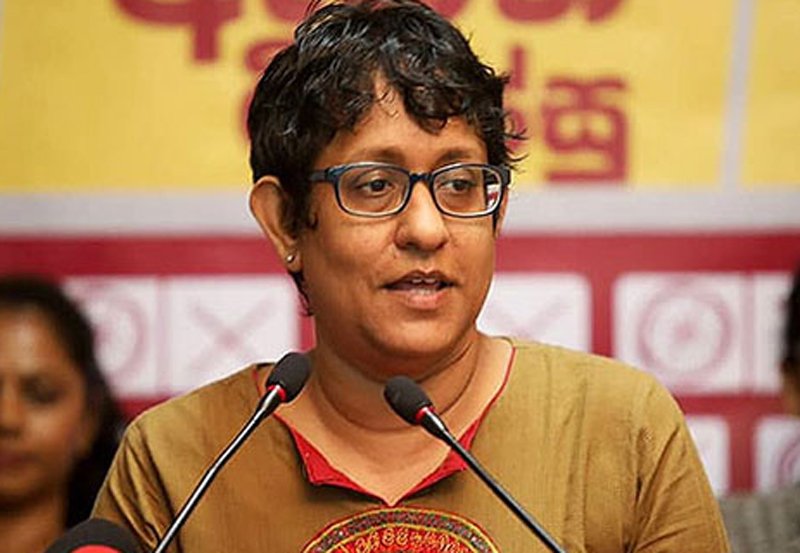
The National People's Power (NPP) Parliamentarian Dr. Harini Amarasuriya today filled a Special Determination petition in the Supreme Court to challenge the constitutionality of the Online Safety Bill.
The petitioner argues that the bill carries significant implications for the fundamental right of freedom of speech and expression, as well as the right to publication guaranteed by Article 14(1)(a) of the Constitution. She further contends that the proposed bill seeks to curtail freedom of speech, expression, and publication.
Citing the precedent of the Supreme Court case Joseph Perera v. Attorney-General, the petitioner emphasizes that permissible restrictions on fundamental rights, even when enacted into law, must not be excessive.
The petitioner also points out a difference in the appointment process of the Online Safety Commission in comparison to other independent commissions. Specifically, she notes that the Constitutional Council does not recommend the members of the Online Safety Commission, and the President appoints five members directly.
Regarding the powers vested in the Commission, as outlined in Clause 11 of the Bill, the petitioner argues that they are vague, overbroad, arbitrary, unreasonable, and infringe upon Articles 3, 4(d), 10, 12(1), and 14(1)(a) of the constitution. She asserts that this Commission holds the authority to determine what qualifies as a 'prohibited statement' or a 'false statement' and can issue directions, accompanied by penal consequences in case of non-compliance.
The petitioner seeks a declaration that the bill should undergo approval by the people through a Referendum, in addition to the standard 2/3 approval by the Parliament. This petition has been filed through Attorney-at-Law Manjula Balasooriya.