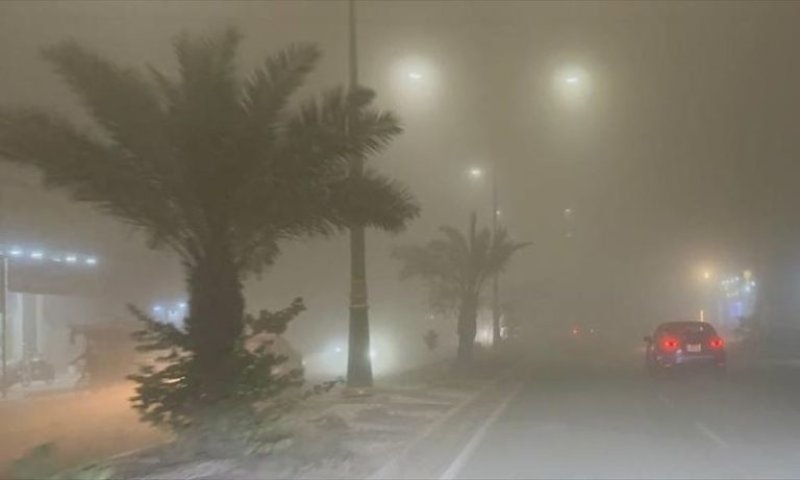
As least three people have died and more than 1,300 others have required medical attention as dust storms sweep across Iran's southeastern Sistan-Baluchistan province, state media reported Friday.
Severe dust storms in Iran’s southeastern province of Sistan and Baluchestan have led to the deaths of at least three people, with hundreds more seeking medical attention. The head of the province’s crisis management department, Majid Mohibi, stated that reduced visibility due to the dust storms had been a key factor in the fatalities. Over the past three days, 1,346 individuals have sought medical help, with most of these citizens living in five towns near the Afghanistan border. Respiratory, cardiac, and eye-related symptoms were the most common issues reported.
The regional meteorological center has predicted that the strong winds and dust storms will continue for several more days. Dust and sandstorms have always affected the Middle East but have become more intense and more frequent in recent years. Experts associate this trend with overgrazing, deforestation, and overuse of water bodies, causing them to dry up at an increasingly alarming rate. This, in turn, has spurred regional water disputes.
Iran, with a population of over 85 million, is among the countries most vulnerable to climate change and the rise in global temperatures. It has also endured repeated droughts as well as regular flooding, a phenomenon made worse when torrential rain falls on sun-baked earth. Arid or semi-arid environments, which cover about 33% of the total world land area, are the major origin of dust events. Increasing dust storms originating from western neighboring countries of Iran in recent years have influenced western and even central parts of Iran.
These dust storms are associated with various environmental and socio-economic problems. Suspended particulate matters of dust storms in the west of Iran cause PM 10 pollution in various cities. In some instances, measured concentrations of particles in the dust storms reached more than 6,000 μg/m3, significantly higher than the World Health Organization’s defined 24-hour average concentration of PM 10 for ambient air.
Stifling dust storms frequently envelope both big cities and rural towns across Iran, disrupting crucial parts of public and economic life such as education, commerce, public health, agriculture, trade, and transportation. Dust storms impose serious public health risks. If inhaled, fine dust particles can penetrate deep into the lungs. They can cause infections, respiratory difficulties, and cardiovascular problems. Moreover, dust storms can close roadways, rail lines, and airports, choke crops, clog machinery, and cloak cities in debilitating air pollution.
Studies of several Iranian cities have found particulate pollution routinely shooting far above these guidelines during dust storms. The situation calls for urgent action to mitigate the effects of dust storms and to address the root causes. The country’s water and land management practices need to be improved to prevent worsening environmental conditions that exacerbate dust storms. Furthermore, global climate change, which may further increase drought and desertification across Iran and southwest Asia, must be considered in the country’s long-term planning.