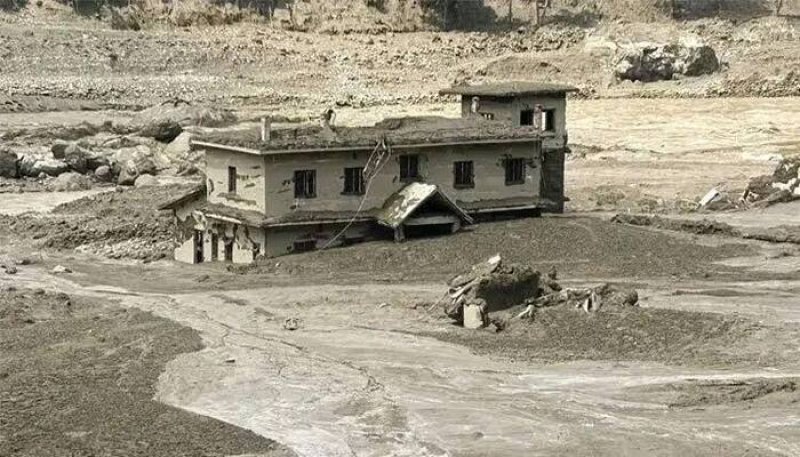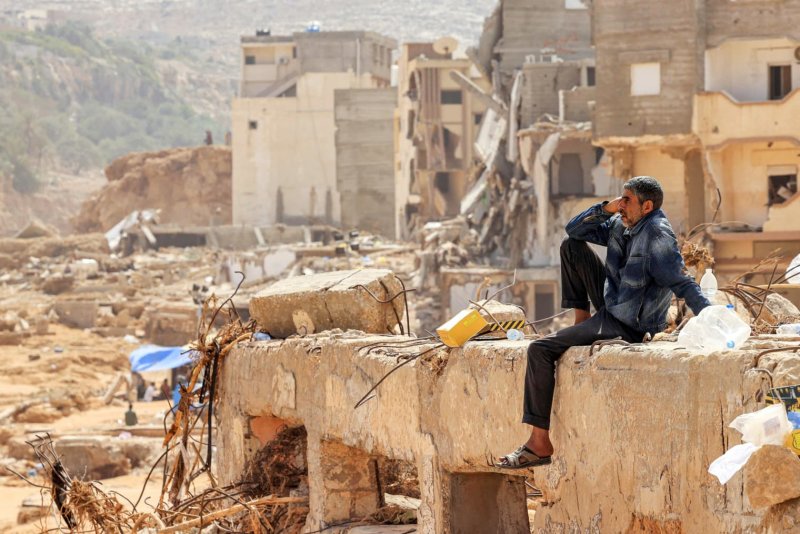
It was like being “in the middle of the sea with massive waves crashing around,” said high school teacher Ahmad al-Sharif, who scrambled to the top of his building with some neighbors as a wall of water swallowed up cars, homes and bodies.
In the darkness and faced with a wave of water so large it felt like a “tsunami appearing in front of you,” he recalled, neighbors were screaming as the deluge destroyed the city. Some were shouting “Save us! “Help us!” while others were saying the “shahada,” the Islamic affirmation of faith, as the waves crashed over them and pulled them under.
Al-Sharif, 34, spoke via voice message from a shelter in Derna, the city in eastern Libya that was devastated by last week’s floods.
“Most of my friends from the neighborhood” have died, he said. “People have been found in their homes … people have been found in the sea.”
Thousands of people have been killed, with thousands more missing in the floods that survivors and experts told NBC News was not merely a natural disaster.
Years of civil war, corruption and institutional neglect left residents of the North African state at the mercy of Mediterranean storm Daniel’s extreme weather, as did the authorities who “frankly had nothing but contempt for their people,” said Tarek Megerisi, a Libya expert and senior fellow at the European Council on Foreign Relations, a think tank.
Fury that simmered for a week has now erupted into protests against local officials, with the home of Derna’s ousted mayor torched.
Here’s how the heavy rainfall turned so deadly in Libya.
The rain was getting heavier and heavier around midnight, but residents in the Wadi Derna Valley felt confident that the dams would hold — as they had before.
The two structures, Abu Mansour and Derna, were located just uphill from the Mediterranean coastal city and meant to protect its almost 90,000 residents.
The people were used to occasional flooding and on Sept. 10, even rain heavy enough to fill the first dam did not sound the alarm.
“We’re used to this … we’ve seen the same scene in 2011 without a catastrophe happening,” said al-Sharif, who was streaming it all live on Facebook as the canal started overflowing.
Residents took videos of the water level rising, then returned home to dry off and sleep as the night got darker and wetter.
But it was soon clear that this was not just another downpour.
“We started to hear screaming in the streets. ‘Torrent! Torrent is coming!’ So everyone went out onto their balconies to look, and we saw the torrent rushing into the streets with a very big force,” al-Sharif said.
It was about 2:30 a.m., he recalled, and cars were lying overturned on streets covered in mud. Thinking the worst was over, people headed out to clean up the roads.
Then “the tragedy happened.” NBC News