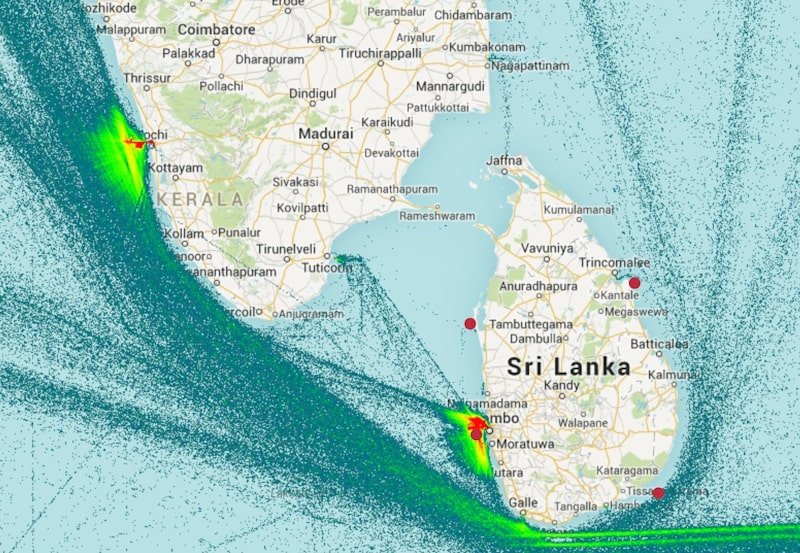
Sri Lanka has recently unveiled its National Hydrogen Roadmap, an ambitious plan to develop and implement green hydrogen technologies in the country.
The roadmap was presented by the Petroleum Development Authority of Sri Lanka (PADSL) and Greenstat Hydrogen India, a subsidiary of a Norwegian energy company focused on green hydrogen, solar, wind, and zero-emission maritime solutions.
The United States Agency for International Development (USAID) provided assistance in the development of the roadmap. Sri Lanka recognizes that green hydrogen presents a unique opportunity to address three key socio-economic challenges: energy security and independence, energy affordability and equity, and environmental sustainability.
Green hydrogen, produced using renewable energy sources like wind and solar power, offers a promising solution for transitioning towards a low-carbon economy. It has the potential to mitigate climate change and reduce greenhouse gas emissions, while also serving as a clean, efficient, and versatile energy source.
The adoption of national hydrogen strategies has been on the rise, with over 30 countries developing or initiating plans in the past five years. While climate goals have been a driving force behind these strategies, geopolitical dynamics and fluctuating fossil fuel prices have also played a role in the shift towards greener fuels, especially green hydrogen.