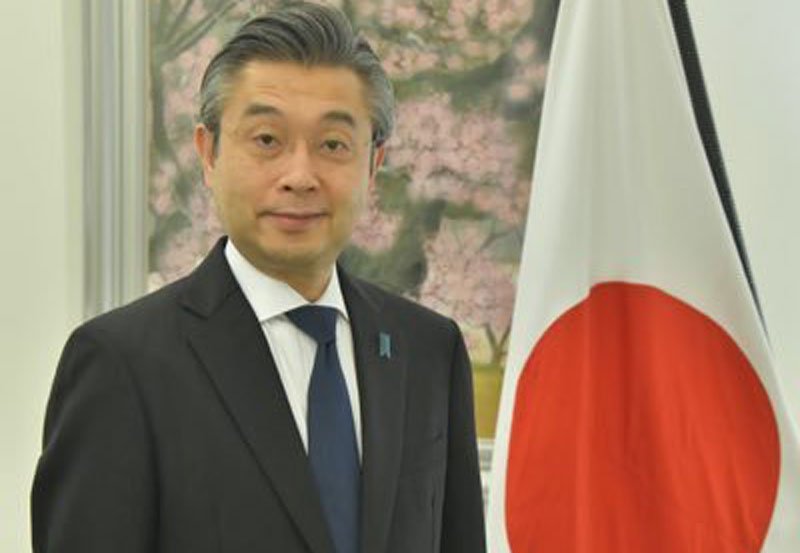
Japan's Ambassador to Delhi, Hiroshi Suzuki, highlighted the strong collaboration between Japan and Sri Lanka in navigating the complex process of debt restructuring as Sri Lanka emerges from last year's devastating economic crisis. He also commended India for its instrumental role in this endeavor.
Speaking at the India-Sri Lanka-Japan Trilateral Cooperation Event, Ambassador Suzuki emphasized Japan's commitment to following international rules and standards in pursuing debt relief. He emphasized the importance of transparent and equitable debt restructuring, where all creditor countries and organizations should be treated equally.
Ambassador Suzuki acknowledged India's significant contribution to Sri Lanka's debt restructuring by providing financing assurances in January. He expressed Japan's appreciation for India's proactive and forward-looking approach to this issue.
The collaboration between Japan and India was further strengthened during Prime Minister Kishida's visit to India in March, where discussions with Prime Minister Modi focused on Sri Lanka's economic challenges and solidified the two nations' close coordination in advancing the debt restructuring process.
The International Monetary Fund (IMF) extended a bailout package to Sri Lanka in March, demonstrating the international community's commitment to the country's financial recovery. In April, Japan, India, and France joined forces to establish an official creditors club, taking up the co-chair positions and becoming the driving force behind Sri Lanka's debt restructuring journey.
The initial debt restructuring meeting in May marked a significant milestone, and in July, Sri Lanka's domestic debt restructuring plan received parliamentary approval, paving the way for coordinated action on both domestic and international fronts.
Ambassador Suzuki emphasized the Japanese government's efforts and policy for debt relief in Sri Lanka, stressing the importance of principles such as transparency and financial comparability. He highlighted that fair treatment among creditor countries is crucial for the success of the debt restructuring process.
During Foreign Minister Yoshimasa Hayashi's visit to Sri Lanka in July, high-level discussions were held with President Ranil Wickremesinghe and Foreign Minister Ali Sabry, reaffirming Japan's commitment to Sri Lanka's debt recovery cause.
Sri Lanka's debt restructuring represents a remarkable example of international cooperation to assist a middle-income country in managing its debt challenges. Ambassador Suzuki expressed optimism, stating that successfully overcoming this challenge would make history and turn it into a reality.