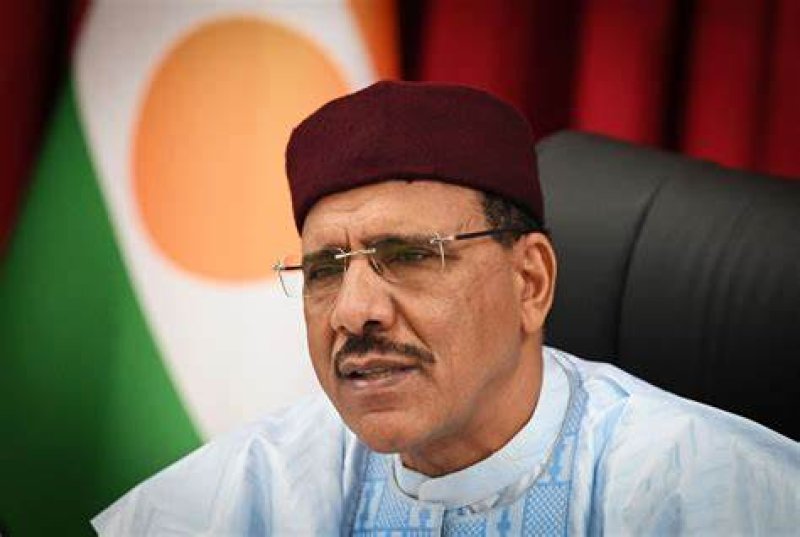
Niger’s deposed president is running out of food and under increasingly dire conditions two weeks after he was ousted in a military coup and put under house arrest, an adviser said Wednesday. The U.S. State Department expressed deep concern about the “deteriorating conditions” of his detention.
President Mohamed Bazoum, the West African nation’s democratically elected leader, has been held at the presidential palace in Niamey with his wife and son since mutinous soldiers moved against him on July 26.
The family is living without electricity and only has rice and canned goods left to eat, the adviser said. Bazoum remains in good health for now and will never resign, according to the adviser, who wasn’t authorized to discuss the sensitive situation with the media and spoke on condition of anonymity.
Bazoum’s political party issued a statement confirming the president’s living conditions and said the family also was without running water.
U.S. Secretary of State Antony Blinken spoke with Bazoum on Tuesday about recent diplomatic efforts, a statement said, and Blinken “emphasized that the safety and security of President Bazoum and his family are paramount.” The State Department statement on Wednesday called for their immediate release.
This week, Niger’s new military junta took steps to entrench itself in power and rejected international efforts to mediate. On Wednesday, it accused former colonizer France of trying to destabilize the country, violate its closed airspace and discredit the junta leaders. France’s foreign and defense ministries in a joint statement called the allegations unfounded.
On Monday, the junta named a new prime minister, civilian economist Ali Mahaman Lamine Zeine. He is a former economy and finance minister who left office after a previous coup in 2010 toppled the government at the time. Zeine later worked at the African Development Bank.
“The establishment of a government is significant and signals, at least to the population, that they have a plan in place, with support from across the government,” said Aneliese Bernard, a former State Department official who specialized in African affairs and is now director of Strategic Stabilization Advisors, a risk advisory group. AP